The city stretched like a wound under the morning haze—its skyline a crown of smoke and glass, its arteries clogged with restless metal. The air was thick with the perfume of grease, exhaust, and despair.
Billboards blinked the faces of false prophets and fast food messiahs, while children in tattered uniforms waited for taxis that never came. It was a city that had once promised liberation and rebirth, but now, its promise had fossilised into slogans. Johannesburg was no longer gold—it was rust.

At the heart of it, Noluntu moved through the crowds like a ghost unsure of its own existence. Her steps were steady, though her mind was fogged with fragments of another life—dreams, half-memories, visions she could not name. The book was the only thing she trusted. She had found it one morning beside the ruins of her apartment block after the fire. Everything else—furniture, clothes, photographs—had been consumed. Only the book remained, its leather cover unscathed, its pages faintly perfumed with myrrh.
The first line she read was not written in ink, but etched like a whisper in her mind:
“Remember, child of the Covenant, for forgetting is the first death.”
Since then, the city had changed shape around her. She saw symbols where others saw smog: the flicker of a neon sign became a shofar’s call; the drones above her resembled locusts. She thought she might be going mad. But madness had its rhythm, and hers danced to the pulse of prophecy.
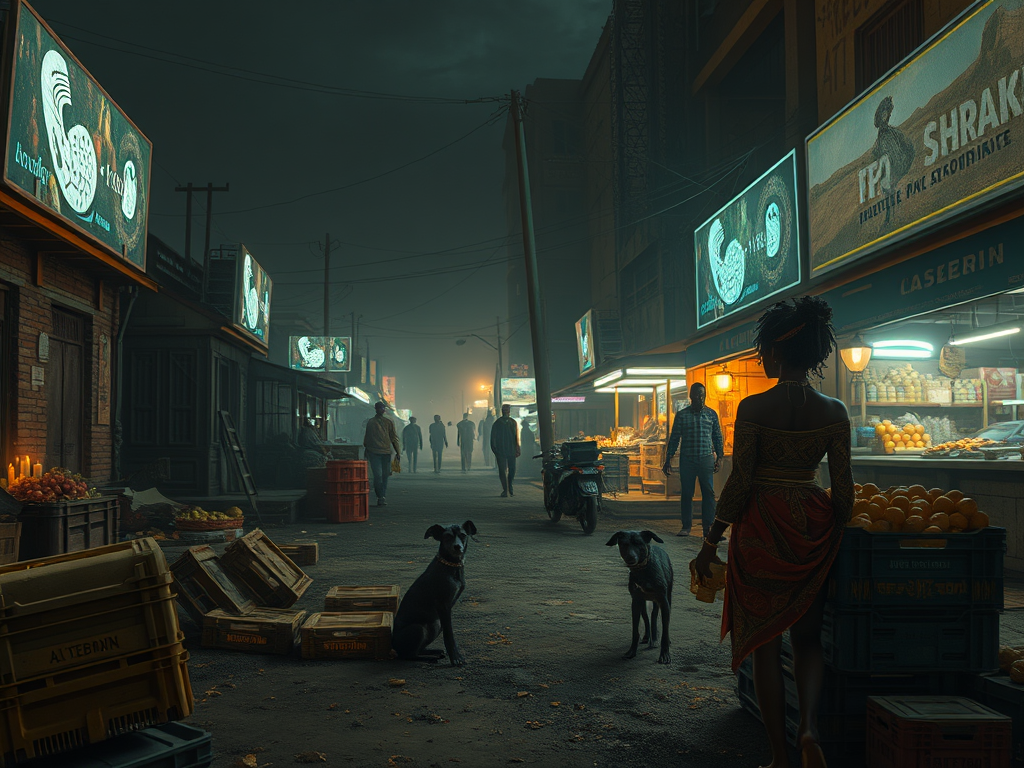
The book spoke of Africa as a sleeping lion—its mane matted with the sins of its children, its roar silenced by foreign tongues. It spoke of kingdoms buried under bureaucracies, of altars desecrated by ambition. It spoke of her—though she did not yet understand how. Each night, she wrote in the margins as if in conversation with the unknown author. Each morning, new words appeared that she did not remember writing.
Outside her window, the people of the city hurried to survive. Fast food stalls glowed under the weight of neon scripture: “Taste & See: 99c Miracles!” Dating apps glimmered with filtered faces, avatars that blinked prayers for validation. Children filmed their poverty for views. Pastors advertised deliverance by subscription.
It was Revelation rewritten as reality TV.
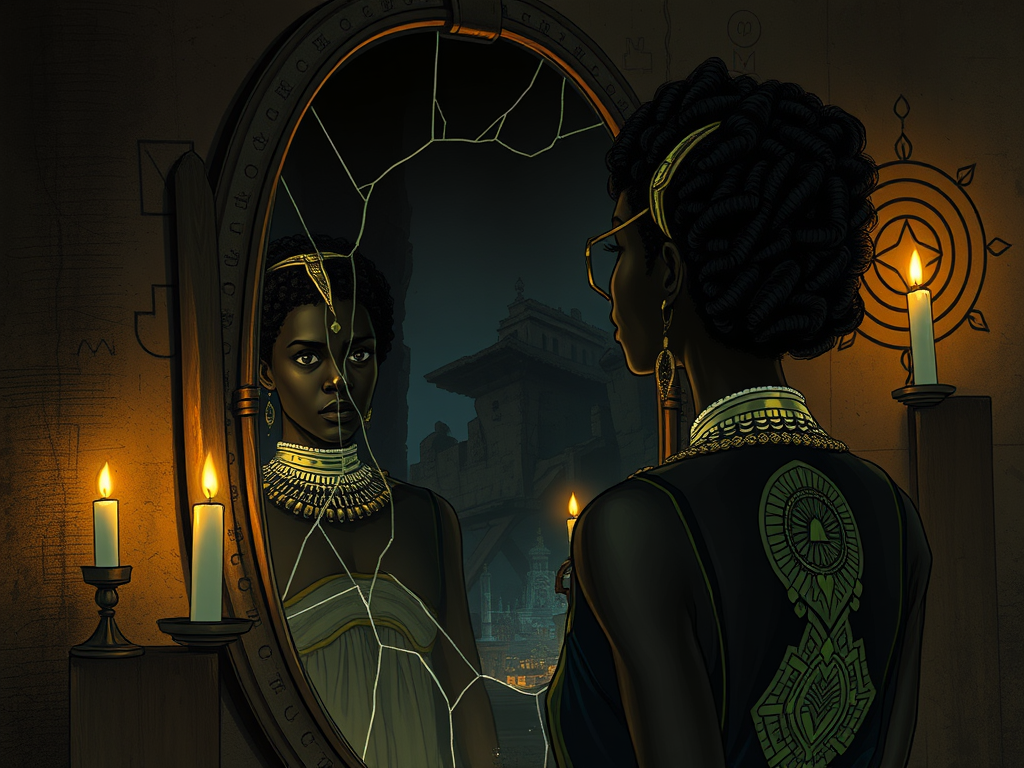
And yet, somewhere between the advertisements and the hunger, she sensed holiness. Not in the churches, but in the quiet defiance of mothers braiding their daughters’ hair before dawn. Not in the noise of politicians, but in the stillness of taxi drivers who hummed hymns at red lights.
Her world was fractured, but something ancient called to her from the fragments. The name Noluntu meant “of the people.” She had forgotten who those people were—but perhaps the book would remind her.
 Lele Muthali