Morning broke like prophecy. A thin mist veiled Johannesburg, softening its edges until the city seemed less concrete, more dream. In that dawn, Noluntu understood that her life had crossed a threshold — not the end of the world, but the beginning of remembrance.
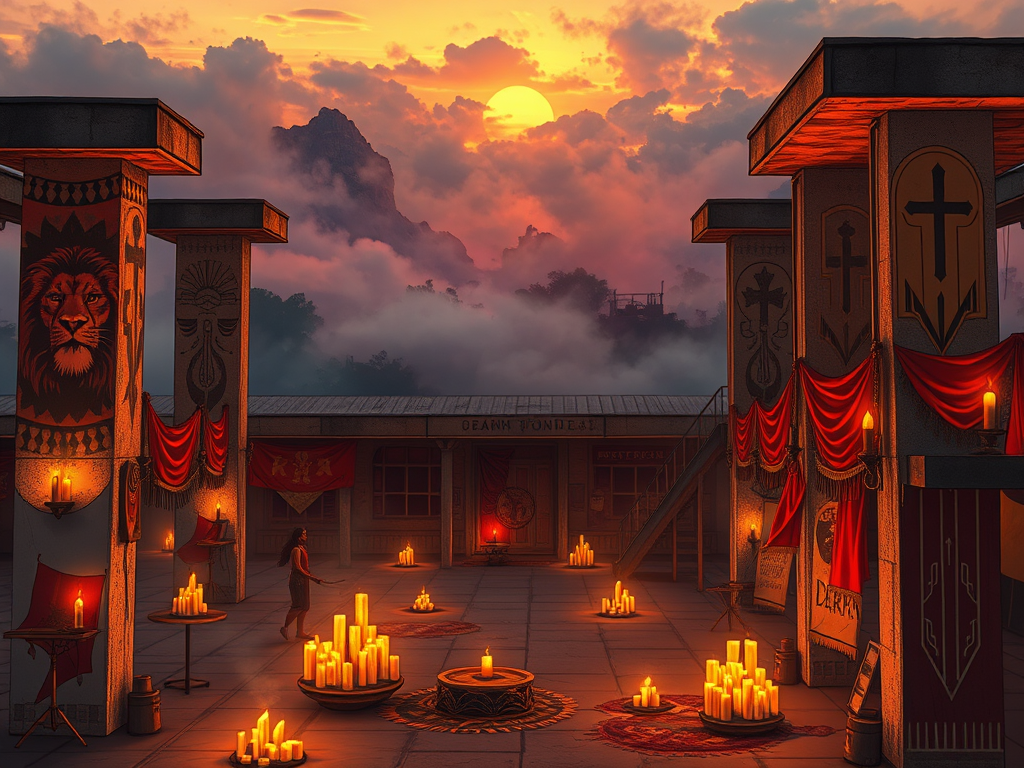
Her book was now a living thing. Its words rearranged themselves with each reading, as if responding to her heartbeat. Passages that once spoke of despair now shimmered with revelation.
She read: “When the lion breathes upon the mountain, every false god will tremble.”
That day, she gathered The Rememberers again — now grown to hundreds, a tide of artists, coders, healers, and visionaries. They met at the disused rail depot in Newtown, now covered in murals and banners. The air pulsed with drums and song.
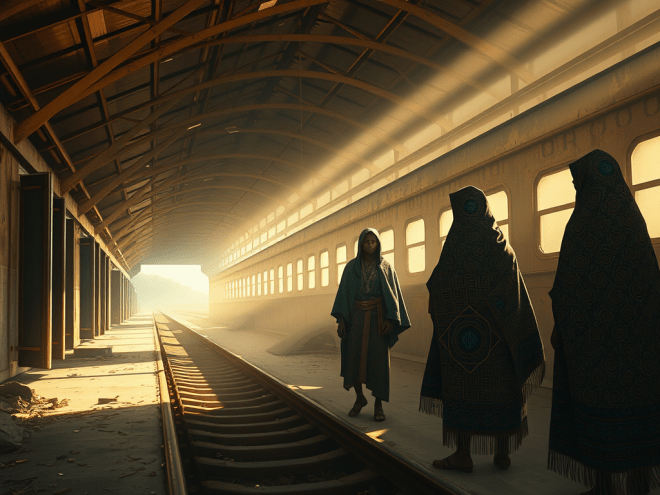
“We are not starting a revolution,” Noluntu said, standing before them. “We are remembering one that began before nations were born.”
She spoke not as a politician, but as something older — a voice of rhythm, of justice, of fierce tenderness. She spoke of the African future as a spiritual inheritance, of a continent once priestly, now reclaiming its forgotten anointing.
A hush fell when she raised her hands. “This is not about vengeance,” she said. “It’s about balance. About healing what was fractured — in land, in lineage, in soul.”
Someone in the crowd shouted, “Amandla!”
Noluntu smiled. “Amandla ngentobeko — power with humility.”
That night, under the new moon, the movement was born — The Covenant of Judáh.
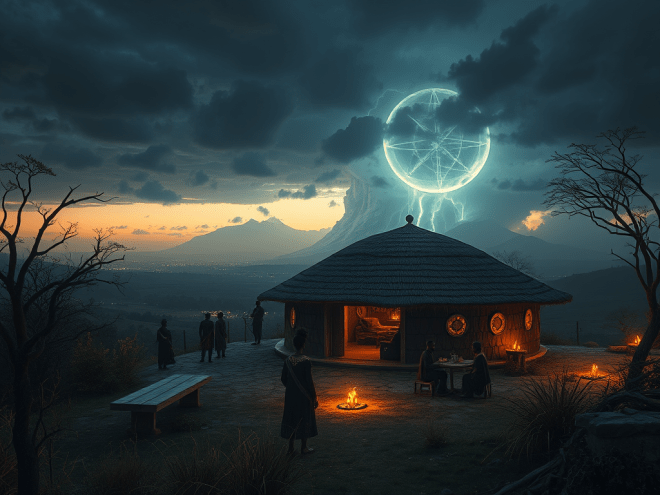
It spread faster than fire, carried through encrypted networks and whispered prayers. Artists turned songs into sermons, hackers defied surveillance, healers opened sanctuaries. Noluntu’s name became code for hope.
But hope, as history knew, never rose unchallenged.
 Lele Muthali