Noluntu’s awakening was not gentle. The dreams grew more vivid, her senses sharper. She began to hear whispers in the hum of electricity, see symbols flicker across billboards.
It was on one such night that she met The Mirrorwoman.
The woman appeared in the park near Maboneng, where Noluntu went to clear her thoughts. She was ancient but ageless, wrapped in a cloak of indigo cloth that shimmered like the night sky. Around her neck hung a pendant shaped like a serpent eating its tail.
“You have fire in your blood,” the woman said. “But you have forgotten how to wield it.”
Noluntu stepped back. “Who are you?”
“I am what your mother called isangoma, and what your ancestors called seer. Some would call me witch, but that word was twisted by men who feared women who could see.”
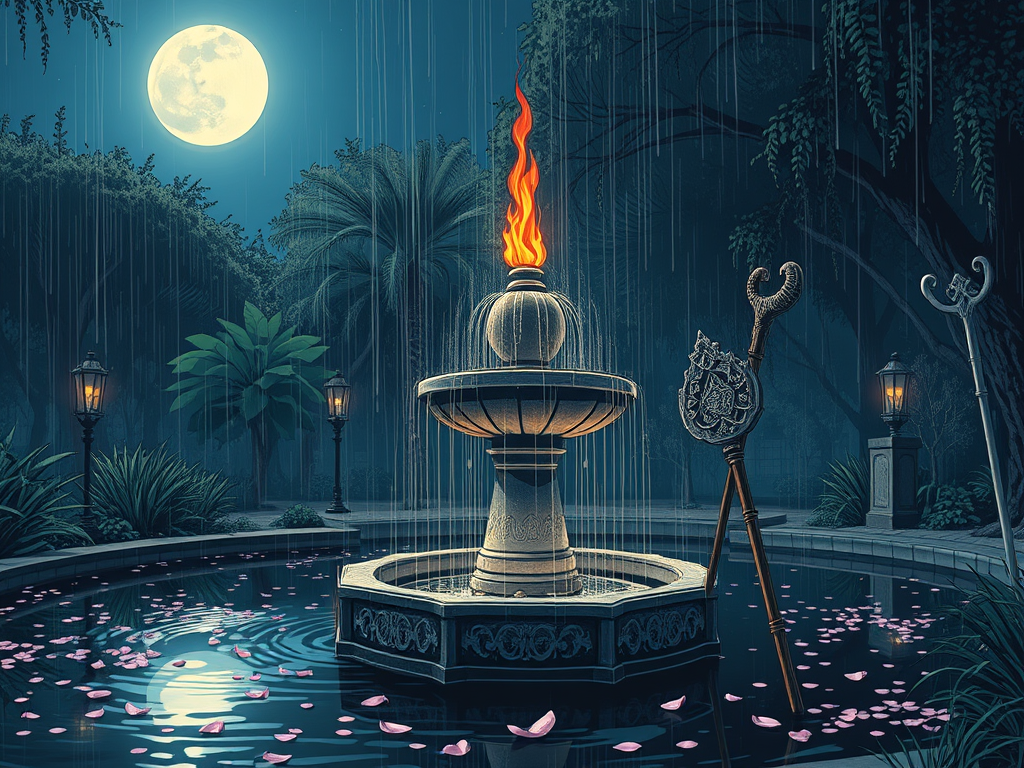
The Mirrorwoman led her to an abandoned fountain, its basin filled with rainwater and fallen petals. “Look,” she commanded.
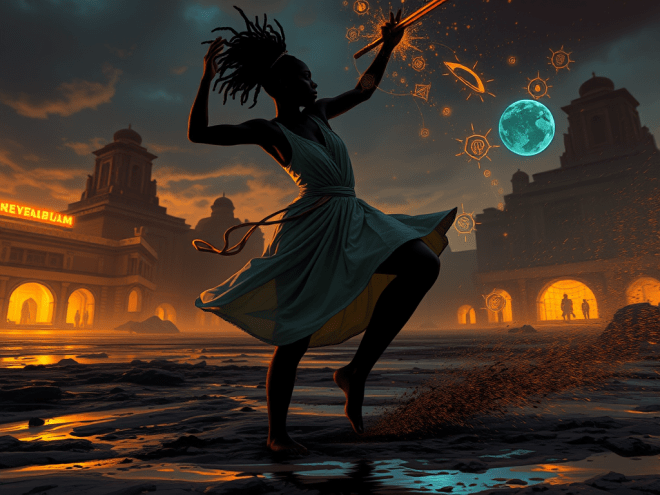
In the water, Noluntu saw herself dancing—not in the present, but in another time. Her body moved with the grace of a ballerina and the power of a warrior. Around her, figures in white sang an ancient hymn in isiXhosa and Hebrew intertwined. She held a staff carved with names. When she looked closer, she saw Asher standing beside her, wearing robes of gold and linen.
The Mirrorwoman smiled. “You and he are bound. Two flames from one covenant. But flame destroys as easily as it warms.”
“Is he—” Noluntu began.
The old woman nodded. “He is of the watchers, child. The ones who guide the chosen back to memory. But beware: not all who watch wish you well.”
When Noluntu looked again, the reflection had changed. The figures were gone. Only fire remained—fire that burned without consuming.
“Witchcraft is not evil,” the woman said. “It is creation unaligned. Power without order. The question is—whose order will you serve?”
That night, Noluntu dreamed of seven doors, each carved with the same serpent-star sigil of The Ring. And behind the last door, a man’s voice whispered: “Africa must burn before it can rise.”
 Lele Muthali