I pray this letter finds you when you need it. I understand the burden you carry, so I’ll begin by assuring you of a truth which I hope will penetrate your pain, depression, and anxiety: The loving God who created you is still in charge.
This truth, indeed the truth of all truths, goes back to Genesis 1:1 “In the beginning, God created the heavens and the earth.” This verse is more than just the opening line of the Bible; it’s a foundational truth that will shape your understanding of God and the world around you. In only 10 words, the verse offers you the following encouragement:
Before anything else existed, God was there, initiating everything you know and see.
The Hebrew name used here, “Elohim,” reveals God’s nature as the powerful Creator. Remember, this Creator is not just powerful but also loving and intimately involved in every detail of His creation.
The phrase “the heavens and the earth” encompasses all of creation, from the vast expanse of the cosmos to the smallest intricacies of life. Everything finds its origin in God’s loving hand.
Now, why is any of this important to you? Acknowledging God as Creator forms the bedrock of your existence, and developing faith. It’s more than a theological concept; it’s a truth that will ground you in times of uncertainty and inspire awe in moments of wonder.
As you grow, remember that understanding God as “Alpha and Omega” shapes your worldview. It defines your identity and purpose. It keeps you humble by reminding you of your place in His economy.
Depend on God. Trust in His wisdom and guidance. The same God who spoke the universe into existence is the One who cares for you deeply. Let this truth anchor your prayers, your decisions, and your relationships.
I’ve created a YouTube video to explore the practical application of this teaching. In sum, pray fervently and seek God’s presence in every aspect of your life. Let His creative power and purpose infuse your thoughts and actions. Your faith journey begins here, with the profound truth of Genesis 1:1.
Prayer is rooted in the belief that there is a power greater than oneself that can influence one’s life. The Latin word from which “prayer” is derived means “obtained by begging, to entreat.”
There is no set way to pray. Prayer has a very personal meaning arising from an individual’s religious background or spiritual practice. For some, prayer will mean specific sacred words; for others, it may be a more informal talking or listening to God or a higher power.
My own prayers are typically spoken prayers, silent prayers, and prayers of the mind, the heart, and what I can best describe as ‘union with God’. Prayers take different forms; they may be directed (with a specific outcome in mind) or non-directed. They may be intercessory, contemplative, meditative or petition.
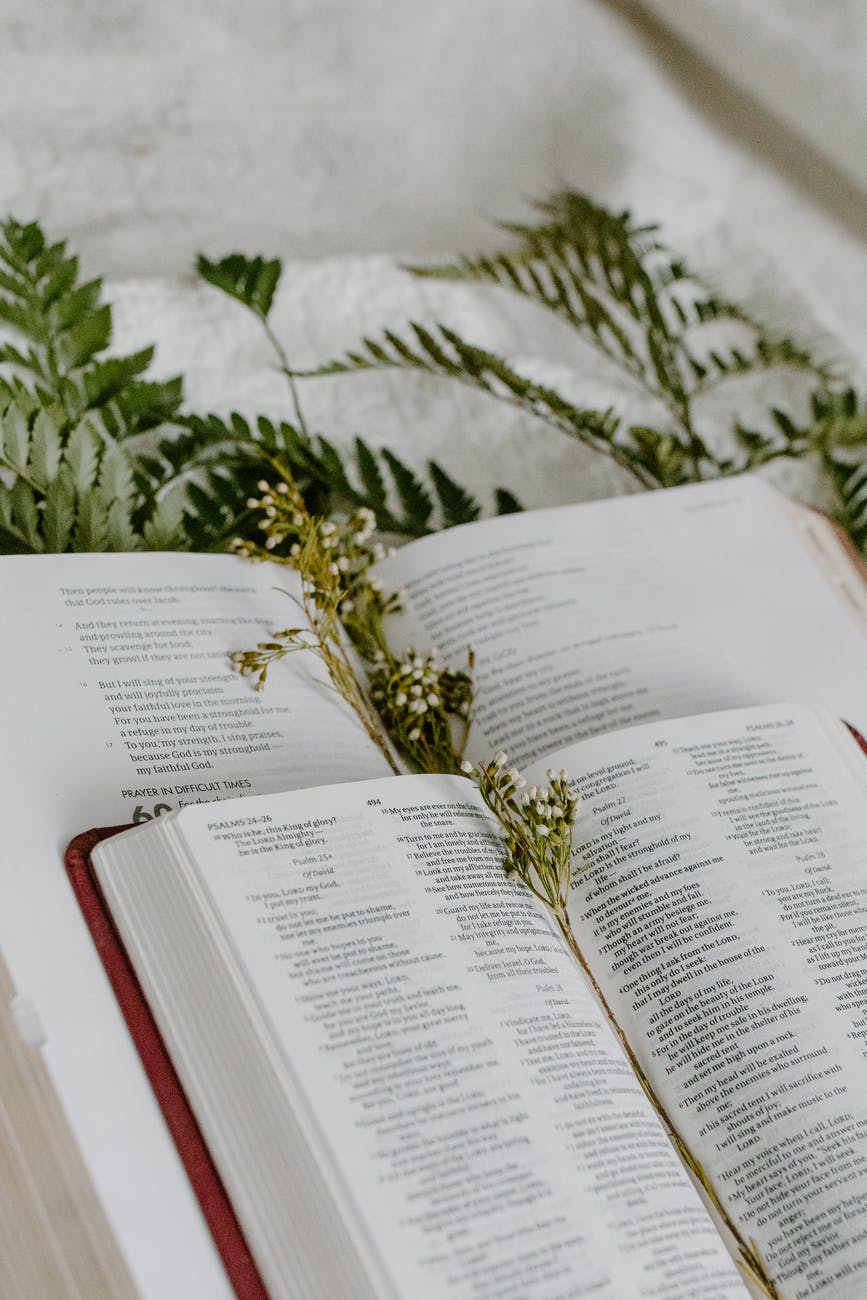
Though what is true about prayer across the board is that it helps improve my spiritual health. Prayer helps me develop a relationship with God [1], helps me gain an understanding of God’s loving nature [2], and provides answers [3]. Prayer also helps me find direction in my life [4], gives me strength to avoid temptation [5].
Prayer invites the Holy Spirit into my life [6], aligns my will with God’s will [7], and helps me become more like Jesus [8]. Along with fasting, prayer helps me accept God’s will [9].
Moreover, prayer improves my overall wellbeing. I was surprised to learn that there has been research conducted on this issue. The research concludes that prayer can calm one’s nervous system, shutting down the fight or flight response. It can make one less reactive to negative emotions and less angry.
When prayer uplifts or calms, it inhibits the release of cortisol and other hormones, thus reducing the negative impact of stress on the immune system and promoting healing.
Ultimately, prayer begets peace. It elicits the relaxation response, which lowers blood pressure and other factors heightened by stress. It also releases control to something greater than oneself, which can reduce the stress of needing to be in charge.
Prayer brings a sense of a spiritual or loving presence and alignment with God which elicits feelings of gratitude, compassion, forgiveness, and hope, all of which are associated with healing and wellness.
– Lele M
Notes:
[1] Just like my parents here on earth, my Heavenly Father wants to hear from me and talk to me. When I pray, He listens. Then He answers my prayers.
[2] The scriptures teach, “God is love” (1 John 4:8). I can feel that love as I speak daily with Him through prayer, seeking His guidance in my life.
[3] Praying and listening to the answers God gives me can help me better understand my purpose in life.
[4] When I privately pray to God, I can work through serious decisions in my life. God always listens and often provides the specific answers and guidance we seek. Even when He chooses not to answer immediately or in the way we might have hoped, prayer itself is a way to find peace.
[5] Jesus counseled His disciples, “Watch and pray, that ye enter not into temptation” (Matthew 26:41). Through prayer, I can overcome temptations to sin. Praying for God’s help to keep me from making wrong choices gives me the strength to do what is right.
[6] As I pray daily, I invite the Holy Spirit to be with me and to comfort and direct me. The Holy Spirit can give me answers, help me feel God’s love, and bring feelings of peace and joy into my heart.
[7] The purpose of prayer is not necessarily to tell God how I want Him to do things. Rather, it’s to better understand Him and His ways, bringing myself into alignment with His will. As C.S. Lewis is often attributed as saying, prayer “doesn’t change God. It changes me.”
[8] Jesus set the perfect example of prayer. If I try to follow His example through prayer, I will become more like Him and develop a better relationship with Him and Heavenly Father.
[9] Jesus fasted for 40 days and 40 nights before He began His ministry on the earth. As He did this, He communed with God in prayer. Likewise, when I pray and fast, I feel closer to God and better understand the things He wants me to do.
Over the past two years I have been consuming a significant amount of content surrounding femininity, homemaking, and womanhood. I hadn’t been taught how or what it meant to be woman, much less feminine and woman. And as I grew older and became a staunch feminist, I was not interested in learning. Now I am.
Allow me to share my five favourite women creators of content under the themes of femininity, motherhood, homemaking, and womanhood.
On this journey, I have learned to take lessons where I can find (learn) them. I draw inspiration from various sources; Scripture, my experiences with women around me, and the insights of courageous women I find online who are audaciously feminine.
Behind my fervor is my hope that what I glean will be the canon of knowledge from which I will someday teach my own daughter.
“I don’t believe women should be pastors,” she repeated. Although her eyebrows rose to emphasise her words, her voice retained its candor and clarity. She let the words rest in the air unassumingly.
He gave her a perplexed look and both of them fell silent for a moment. He seemed to be allowing her the pause she needed to deliver her punchline. The punchline was a few seconds overdue when he realised it would not be coming. She wasn’t going to renege on what she’d said. At this, his shock turned to curiosity.
“Why not?”
Thinking of Ephesians 5:23, she said “I don’t believe the Bible teaches it. I believe in the headship of the husband over the family and congregation.”
Her matter-of-fact demeanor was disarming and his eyes narrowed in a slight reflex.
These days, I find myself wanting to qualify my position. I appreciate that I don’t have to. I simply feel I should.
I do it because I want to assure my interlocutors that they are not speaking with someone who doesn’t give thought to these issues. I want to offer them relief. I want to assure them that there would be no need for platitudinous sloganeering. I want to dare them to be honest. I want them to know that I am eager for critical reflections.
I want to play open cards. I want to ensure they aren’t seduced into conversation by the appearance that I may be an ideological damsel in distress so lost in oppressive thought and confused by the patriarchy that she couldn’t even see she needed help.
I want to offer them peace and ease about making arguments which they may think are so foreign as to offend my sensibilities, so revolutionary as to shake the foundations on which my convictions stand, and so unlike my own as to assault my very existence.
I want to dispel any presumption that I have only ever believed what I now know to be true. I want to reassure them that I have considered the contention. I care about the subject matter, I will be careful with it.
Her eyes softened and she smiled warmly. “You know, I actually used to be a feminist.” He thought he heard a note of sincerity resonate somewhere in the back of her voice.
Her attempt to put him at ease was having the opposite effect. He couldn’t understand why a dynamic and opinionated young woman living in one of the most cosmopolitan cities in the contemporary world would abide by archaic doctrines.
Something caught the corner of his eye as he studied her face. It hung around her neck on a delicate silver chain. It rose and fell gently as she breathed. The sleek symbol reflected the afternoon sunlight in a soft rhythm which gave it the appearance of swaying girlishly. It was the instrument by which early Roman soldiers tortured and killed Jewish insurgents. The cross.
He shook his head incredulously and smiled before he looked squarely into her eyes, reclined in his seat, and asked the question she had been expecting to hear.
In recent times I have reflected at length about womanhood – what it is, and entails. This is because of the ever increasing prevalence of gender ideology and transgenderism. Primarily it has been influenced by my coming to faith and accepting my identity in Christ as the views which shape my perspective on gender ideology are taken from Scripture.
Who and what is Woman? If you consult the internet, you may find answers to the effect of;
Urban dictionary –
‘A real woman is a woman of virtue. She allows the man to have his authoritarian role, but also doesn’t allow anyone to walk over her and diminish her value and what she brings to the table. A real woman understands that there is a two player part in what a man and woman can build together, as a unit.’
‘I would define a ‘woman’ as a person who is a legitimate foil for (white) men’s sexual, social and political dominance, and who is thus worthy of protection from (general, random) patriarchal violence. ‘Women’ exchange their subjection to general, random patriarchal violence for subjection to their husbands’ patriarchal domination when they become ‘wives’. ‘Wife’ is understood as the pinnacle of the social status known as ‘woman’.’
Oxford Languages –
‘an adult female human being.’
Scripture provides that woman was created in the likeness of God, and from man’s rib. Woman has relational capacity, a nurturing nature, vulnerability, beauty, and responsiveness. Throughout this series, I will lay my personal journey bare and present my exploration of womanhood. This is your invitation to join me on this pilgrimage, if you dare.
I moved into a new place recently. It is a small cottage in a lovely, quiet suburb. It is easily the most beautiful and peaceful place I’ve had to learn to call home.
I’ve always regarded myself as a homebody. Not only am I an introvert, I prefer to stay indoors. I don’t just want to be alone, I want to be alone at home. I have been through seasons when I never wanted to leave the house because I was uncomfortable being in public and socializing. There have been two such periods which I can recall – once during my teens, and again coming into my twenties. Both these periods lasted about two years.
During these times I would leave the house only when it was absolutely essential. I would be irked even by those tasks which were indeed imperative and required that I step out of my comfort zone. Home was my safe space. I did not necessarily love and enjoy being in the space I called ‘home’, I simply preferred it because it was where I could be on my own, and embrace my reclusive state. This distinction will become important later.
On the other hand, I have been through other seasons during which I felt a deep discomfort being home such that I would look for reasons to stay away. These didn’t even have to be good reasons; any would do. Whether it was being out with friends, at school doing extracurricular activities, visiting relatives – I would be eager to leave the house, and I would dread returning. When I was home, I would itch for reasons to leave again.
Fascinatingly, the reason behind this strong aversion was the same reason that I had, at other times, preferred to stay in; being at home meant being on my own. Though during these times the mere thought made me uneasy. I was uncomfortable with my own thoughts. And after a while of running from my thoughts incessantly, there was the added and overwhelming deterrent that they had become unfamiliar to me. I simply didn’t know how to be with and handle my thoughts – my own stillness was foreign to me. These seasons, too, have occurred more than once in my life, and also spanned an approximate duration of two years.
However, for as long as I can remember, I have never had the experience of loving my home and loving being home. I have never had a healthy relationship with my home. Whether it was my childhood home or a university residence, I viewed these spaces in one of two ways.
I viewed home either as nothing more than a desperate hiding place, akin to how an addict views their drug of dependence – no longer using for the euphoria it may induce, but for fear of being sober. A mere lesser evil.
Alternatively, I viewed home as my demons’ lair, a den of terror to be avoided my any means necessary. It was a place where my thoughts would be forced into the light of silence and solitude, a place which threatened to expose the dark corners in my mind into which I was not yet ready to venture.
When I fell in love with God, my perspective on home changed drastically, such that I’ve discovered that I am a homemaker at heart. Imagine that! I don’t just love homemaking, I delight in it. It actually brings me joy.
I take pleasure and pride in creating a clean and peaceful environment for myself and others. I find fulfillment in tasks such as cleaning, cooking, baking, and decorating in the home. I love to fill the space with lovely aromas, whether through gentle scented candles, a pot of savoury stew on the stove, or freshly baked chocolate brownies cooling on the kitchen counter. I love to set the atmosphere with beautiful flowers, pictures, and furniture.
Along with this revelation of myself, I came to realize that this is the healthy middle I had never known and never experienced – this ‘loving being home’, and also ‘enjoying being out of the home’ was strange.
After all, I’ve learned, it is on my afternoon walks when I take in my surroundings that I realize how much I appreciate nature and flowers in particular. I stop to smell their petals and stroke their leaves. These experiences of mindfulness in my outdoor natural surroundings, bring me to want and appreciate flowers in my domestic space. Being outdoors helps me to appreciate my time indoors even more, and inspires me to make my home the perfect sanctuary for me.
I am ultimately finding that homemaking requires me to be comfortable both in my home and outside my home. Don’t get me wrong, although all things are possible through God, I’ll probably always be an introvert. Even outdoors, I’ll likely always prefer the spaces that are least populated.
Though despite my personality and disposition, I am learning to feel at home regardless of where I am. I am learning that God is my true home, and He is always with me. Home is always with me. I am always home.
I often feel like I am not enough; not doing enough, moving fast enough, pushing hard enough, praying long enough, worshipping often enough. I have this sentiment in common with most (if not all) the people in the world – past and present.
Isaiah 50:7
Because the Sovereign Lord helps me, I will not be disgraced. Therefore have I set my face like flint, and I know I will not be put to shame.
It is no wonder then, that popular culture is filled with “self-love” and “you are enough” sloganeering. There is self-help, self-improvement, self-love, and self-affirmation propaganda at every turn. The prevailing presumption seems to be that man is perfectable, and can indeed perfect himself. Ironically, according to culture, the problem can become its own solution. There is no concept of the answer lying outside the self. In fact, “salvation” is a word almost exclusively used in a religious context. Why is that?
I was challenged recently, during a discussion about the four chapter gospel – ‘the fall’, in particular. I was asked to recall an instance when I most felt the effects of sin and the fall. In my chronically overthinking nature, I did not offer an answer because I thought the one I had would come across as flippant and inadequate. Instead, I dove into the deep waters of thought rising steadily to drown out the conversation. So finally I attend to that question here. When have I most felt the effects of sin and the fall? After salvation.
I once heard a pastor remark that if you’re not enjoying sin, you’re doing it wrong. He was speaking about the conviction believers feel when they sin, when they fall short of righteousness. One who does not believe in God and living according to His word is not susceptible to conviction about partaking in sinful behaviour the way a Christian may be.
Indeed the unbeliever does not view their behaviour as sinful at all. They do not accept the Christian standard, thus the question of whether they transgress the bounds of said standard is irrelevant. The pastor was illustrating that willful sin is not worth it. Especially not to the Christian who will spend their time in sin feeling convicted, knowing that they should not be there. That conviction is the beauty of salvation by grace.
Salvation has affirmed that I am not enough, and liberated me with the truth that I don’t have to be. Culture, as they say, could never.
‘Perfect for our skeptical times, this book will demonstrate to any open-minded reader that, contrary to Dawkins’ atheistic claims, biblical Christianity is reliable and relevant, powerful and persuasive.’ – Professor Edgar H. Andrews
Blanchard offers an elegant and concise engagement with Dawkins’ scholarship. He reveals Richard Dawkins’ as a man on a proud mission to ‘attack God, all gods, anything and everything supernatural, wherever and whenever they have been or will be invented’ [1].
This is a crucial consideration for Dawkins’ readers, as it demonstrates a bias so passionate it debilitates much of Dawkins’ latter scholarship. To his credit, Dawkins is upfront about his intention to convert his readers to atheism. That is, after all, Dawkins’ appeal. At least, that is why I purchased and read his work years ago as a 16-year-old militant atheist.
The God Delusion and The Greatest Show on Earth are the focus of Blanchard’s response. He tactfully demonstrates that Dawkins’ approach to theology is often shallow, illogical, and ignorant. By the end of the book, he explores the nature of true faith, submits God-centered alternatives, and concludes with a cogent depiction of the only message worth sharing – the gospel of Jesus Christ.
As a former adherent of Dawkins’ cause, I consider Dawkins’ dealt with, decisively.
A while ago, I wrote a piece about how the Bible dragged me, kicking and screaming, to the political and economic center. I titled it ‘Has Christianity Made Me More Conservative?’ because I set out to explore the transition of my econo-sociopolitical views. Particularly, the influence, if any, of my Christian faith in that respect. This piece will further that discussion.
In his book ‘A Conflict of Visions’ Thomas Sowell submits that an interest is distinguishable from a vision. A vision has to do with our perspective about the world and our place in it. It is concerned with what we believe about how the world works – the role of the individual and society. More importantly, visions are what we believe about how the world can, and indeed should, work.
To this end, Sowell observes and discusses two distinct visions under which many conflicts of conviction fall – the constrained vision, and the unconstrained vision.
Join me in exploring and understanding these competing visions over the next few weeks according to Sowell’s compelling account.
I’m going to try to do this without a detailed exposition of my relationship with faith and politics throughout my childhood.
By the time I arrived at university I was quite certain that I was an atheist and my political home was on the left. Beyond reading foundational writings and studying academic debates on postmodernism, Marxism and related schools of thought, I’d personally bought and read ‘The God Delusion’ and ‘The Coming Revolution’ before I left high school. I was invested. I was convinced that I had evaluated the ideas available in the political philosophy marketplace and I had made my purchase. I was a ‘disillusioned’ teenager in a working class, Christian home, and I was won over by socialism and relativism.
Frankly, the left is seductive. The university space I entered was still writhing palpably from the #RhodesMustFall and #FeesMustFall movements of the previous years. The environment was lush with leftist philosophy and my eager mind was reeling with excitement. I was captivated by the world of ideas which seemed to have opened up around me almost overnight.
In the momentous wave of leftist rhetoric, I began to learn the terminology of critical theory, became familiar with Marxist-Leninism, and did so among a community of likeminded, zealous, young people with stories affirmingly similar to my own. It was as if I was finally discovering the truth about the world – pulling back the curtains of society and and finally seeing the ugly cogs of its machinery. I was learning the words and ideas which described and affirmed my econo-sociopolitical experience. I could finally articulate my disaffection with the way things were. I felt empowered.
Soon, critical race theory was the lens through which I saw the world. All my experiences (past, present, and especially future) were neatly explained by the notions of hegemonic power structures, systemic racism, and intersectionality. I was on the radical left; never missing an opportunity to expose ‘the establishment’, disrupt ‘white, heteronormative spaces’, and challenge the idea of objective truth in favour of relative truth and the paramountcy of individual experience.
It was not until years later that I came to see this attitude as defeatist – expecting and sometimes resigning myself to defeat against the pervasive and monolithic ideas of the establishment. I was painfully conscious of what I perceived as the facts of life which threatened my socioeconomic mobility – my ability to live my conception of the good and fulfilling life.
After years of commitment to ‘fighting the system’, I was exhausted. In hindsight, this was inevitable. I had allowed the postmodern worldview to consume me. I found myself feeling increasingly combative, unfulfilled, and searching for meaning to no avail. Though, importantly, I felt entitled to the pain of my past experiences and my anger with the way things were. I wanted growth and hope but would not relinquish my right to hostility in order to make room for it. I was tired and hopeless.
Then, enter the ancient of days. I will reserve the story of mine and God’s courtship for a later piece. For now, I will describe it as an enduring lesson in humility, healing, and humanity. Crucially, I was awakened to the reality of absolute truth. I did not come to believe that God exists, I came to know it to be true – the truth, not ‘my truth’. Immediately, I was forced to interrogate the ‘truths’ I had previously believed about myself, the world, and my place in it.
Obstinately, almost predictably, I contended with my newly changed heart and spirit to allow me to continue to hold radical political views. I attempted to reason that Christ’s teachings were radical, that his work (and indeed Christianity) was a social justice revolutionary effort. This is the deceptive, albeit attractive, line of reasoning argued by purported ‘progressive Christians’. It tries to lay claim to Christ while chasing the allure of radical leftist rhetoric in popular culture. However, I have since found that this view simply does not survive Biblical muster – a requirement I have adopted for all my beliefs.
The decision to trust the authority of scripture in the face of my obvious and inherent fallibility has been the bedrock of my current worldview. With time, I have had to yield to discovering the world anew in what has been an ongoing exercise of humility, healing and humanity. I have had to probe my prior convictions for concordance with the Bible and consequently, I found myself inching closer to the center of the spectrum of political ideology. This came as a mild shock to me given my obsessive devotion to the radical left. Every time I remember this striking change, I am reminded how small I really am and I am grateful for the grace to learn and grow in understanding.
This experience has revealed and continues to reveal a wealth of insight which I intend to explore and develop in my life’s work. I wake up each morning eager for the lessons that await me and excited to sharpen my discernment. But in the interest of keeping this entry brief, I submit my answer in the affirmative – Christianity has indeed made my views more conservative than they have been in the past. Though I am reluctant to assume a position because I hope to continue to evolve as I learn and mature, my views would probably be classed as moderate or liberal in many circles.
It is the details of ‘how’ or ‘why’ my views have changed which fascinate me most. Which views, if any, have survived the shift? How do I make sense of my experience as a vehement proponent of leftist ideology? Having been opposed to moderate-conservative views in the past, what do I understand now about society and governance that I previously did not? How would I respond now to my own previous critiques of centrist positions?
I’m interested in these questions not so much for the answers they may reveal, as for the further, more intriguing questions about political philosophy and human nature that they may uncover.


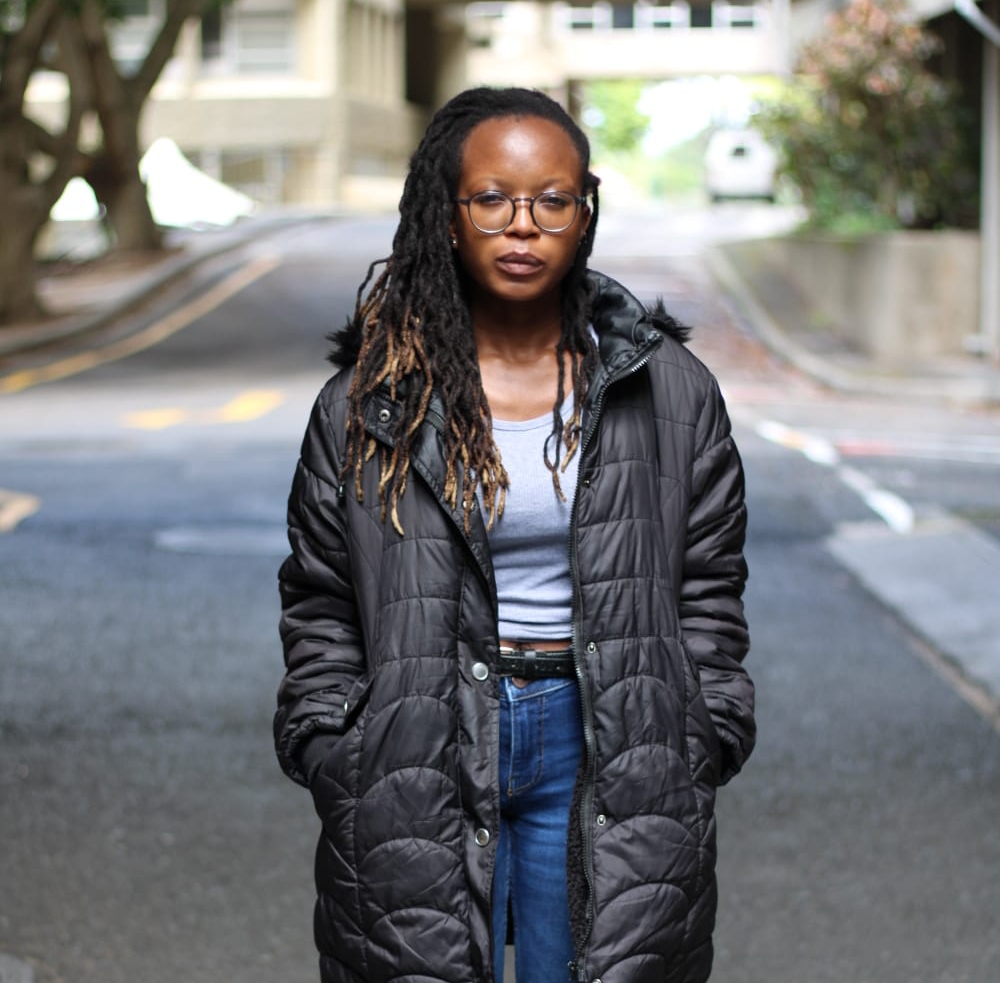


 Lele Muthali