What does it mean to obey a God who calls for ruin?
What kind of justice leaves no room for mercy?
What kind of love levels walls and wombs alike?
Who is this Judge so patient, so perfect, so exacting? Who balances the scale with both blessing and blood?
Do I trust a God who sees beyond sides? Who destroys to rebuild? Who acts not for our comfort, but for His order?
Joshua 5:13-14
13 Now when Joshua was near Jericho, he looked up and saw a man standing in front of him with a drawn sword in his hand. Joshua went up to him and asked, “Are you for us or for our enemies?”
14 “Neither,” he replied, “but as commander of the army of the Lord I have now come.”
In a previous season of my life, I learned that patience is not simply the act of waiting. Instead, patience is how one waits. Patience is the difference between waiting in anxious frustration, and waiting in calm equanimity.
In this season of my life, I’m learning to perfect my patience by not waiting at all. You need time? You’ve got it, but I’m not waiting. I’ll be moving ahead with something else. I surrender any expectations – a feat I owe to God’s grace. In this way, patience is an exercise in discipline.
Meanwhile, human beings are fallen and susceptible to hubris. We have desires, expectations and tend to want to control outcomes. This is why patience, which I understand as the discipline to detach from outcomes, challenges so many. Releasing control (or the illusion thereof) often means facing feelings of vulnerability, and requires courage. It is about cultivating the self-control required to surrender to the unknown.
Beyond courage, however, this manner of detachment requires faith. Faith is having such clarity about eternal truths that detachment from specific outcomes becomes possible: God is in charge; God is love; I am chosen; God is working things out for my good; etc. The question, therefore, is not just “In whose time will this happen?,” but “Who would presume to know better than the Creator?”
This understanding reveals why patience is such a powerful heart posture. The Word tells us that “without faith it is impossible to please God.” Patience, like the other fruits of the Spirit, is a posture of profound inner-strength. It is about trusting God’s Word – His love, grace, and timing. All is and will be exactly as it should be.
I know that my life unfolds in the hand of a Sovereign God and according to His perfect plan. From that perspective, impatience seems quite futile really. I don’t need to know or control everything, I only need to stay connected to the One who does.
Genesis 3 tells of a paradise shattered, of innocence lost, and of an intimacy with God interrupted by a single choice. “What is this you have done?” the Lord asks, His voice heavy with the weight of love betrayed. And in that moment, humanity’s relationship with God—and with one another—was forever changed.
I find myself reflecting on the fall, not in Eden, but in my own life. A public union of hearts and lives, shared and celebrated, has ended. The first partner I ever called home is now no longer mine. The mighty have fallen, the poets say. Though I am no king, my heart feels the weight of that phrase. How fragile the human spirit is, how vulnerable we are when we give ourselves to another, laying bare our hopes and fears, trusting they will be held with care.
In the aftermath, I have asked myself: Was it love that failed, or was it simply us? Is love eternal, as scripture teaches, or is it fractured by the very human vessels that attempt to carry it? Perhaps it is both. Perhaps love remains pure, even as we stumble under its weight.
“To love at all is to be vulnerable,” C.S. Lewis once wrote. “Love anything, and your heart will be wrung and possibly broken.” To love is to risk the fall, to step into the unknown with faith that the one you hold close will not let go. Yet, sometimes, they do. Or perhaps it is we who loosen our grip, weary from the journey, distracted by our own frailty.
The fall reminds me of surrender—not just to love, but to God, who is love itself. What does it mean to surrender when the heart is broken? It means to offer up the pieces, trusting that the hands that shaped the heavens can also reshape the human heart. It means to acknowledge that the fall is not the end of the story. Eden was lost, but grace abounds. The mighty fall, but the humble are lifted.
In this moment, I see the nature of man: fragile, flawed, often blind to the divine within one another. I see the nature of relationships: mirrors that reflect not only beauty but also brokenness. And I see the nature of love: a call to transcend the fall, to forgive as we are forgiven, to endure as God endures.
Perhaps this is the beginning of a new story—not one of perfect love but of perfecting love. For even in the fall, there is grace. And grace, I am learning, is where healing begins.
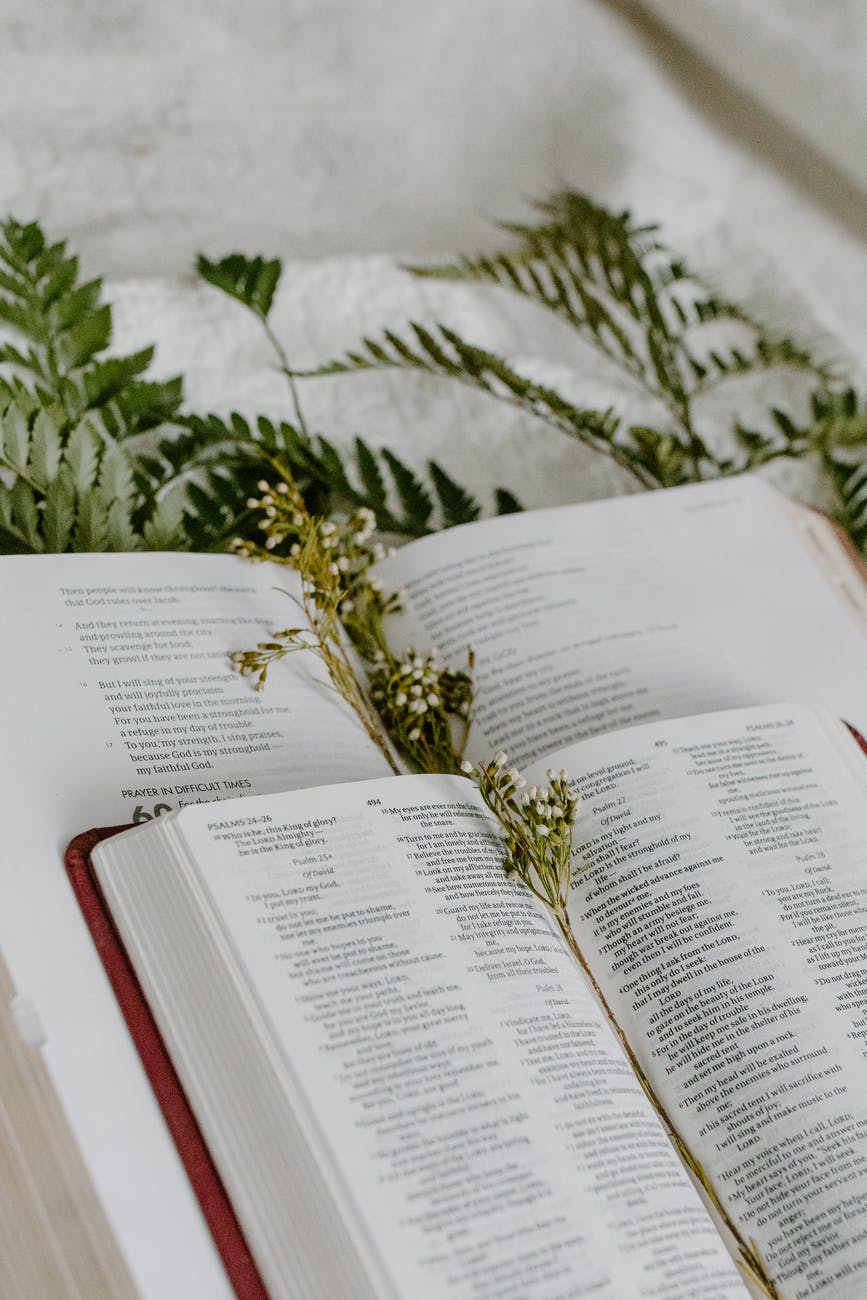
Prayer is rooted in the belief that there is a power greater than oneself that can influence one’s life. The Latin word from which “prayer” is derived means “obtained by begging, to entreat.”
There is no set way to pray. Prayer has a very personal meaning arising from an individual’s religious background or spiritual practice. For some, prayer will mean specific sacred words; for others, it may be a more informal talking or listening to God or a higher power.
My own prayers are typically spoken prayers, silent prayers, and prayers of the mind, the heart, and what I can best describe as ‘union with God’. Prayers take different forms; they may be directed (with a specific outcome in mind) or non-directed. They may be intercessory, contemplative, meditative or petition.
Though what is true about prayer across the board is that it helps improve my spiritual health. Prayer helps me develop a relationship with God [1], helps me gain an understanding of God’s loving nature [2], and provides answers [3]. Prayer also helps me find direction in my life [4], gives me strength to avoid temptation [5].
Prayer invites the Holy Spirit into my life [6], aligns my will with God’s will [7], and helps me become more like Jesus [8]. Along with fasting, prayer helps me accept God’s will [9].
Moreover, prayer improves my overall wellbeing. I was surprised to learn that there has been research conducted on this issue. The research concludes that prayer can calm one’s nervous system, shutting down the fight or flight response. It can make one less reactive to negative emotions and less angry.
When prayer uplifts or calms, it inhibits the release of cortisol and other hormones, thus reducing the negative impact of stress on the immune system and promoting healing.
Ultimately, prayer begets peace. It elicits the relaxation response, which lowers blood pressure and other factors heightened by stress. It also releases control to something greater than oneself, which can reduce the stress of needing to be in charge.
Prayer brings a sense of a spiritual or loving presence and alignment with God which elicits feelings of gratitude, compassion, forgiveness, and hope, all of which are associated with healing and wellness.
– Lele M
Notes:
[1] Just like my parents here on earth, my Heavenly Father wants to hear from me and talk to me. When I pray, He listens. Then He answers my prayers.
[2] The scriptures teach, “God is love” (1 John 4:8). I can feel that love as I speak daily with Him through prayer, seeking His guidance in my life.
[3] Praying and listening to the answers God gives me can help me better understand my purpose in life.
[4] When I privately pray to God, I can work through serious decisions in my life. God always listens and often provides the specific answers and guidance we seek. Even when He chooses not to answer immediately or in the way we might have hoped, prayer itself is a way to find peace.
[5] Jesus counseled His disciples, “Watch and pray, that ye enter not into temptation” (Matthew 26:41). Through prayer, I can overcome temptations to sin. Praying for God’s help to keep me from making wrong choices gives me the strength to do what is right.
[6] As I pray daily, I invite the Holy Spirit to be with me and to comfort and direct me. The Holy Spirit can give me answers, help me feel God’s love, and bring feelings of peace and joy into my heart.
[7] The purpose of prayer is not necessarily to tell God how I want Him to do things. Rather, it’s to better understand Him and His ways, bringing myself into alignment with His will. As C.S. Lewis is often attributed as saying, prayer “doesn’t change God. It changes me.”
[8] Jesus set the perfect example of prayer. If I try to follow His example through prayer, I will become more like Him and develop a better relationship with Him and Heavenly Father.
[9] Jesus fasted for 40 days and 40 nights before He began His ministry on the earth. As He did this, He communed with God in prayer. Likewise, when I pray and fast, I feel closer to God and better understand the things He wants me to do.
Over the past two years I have been consuming a significant amount of content surrounding femininity, homemaking, and womanhood. I hadn’t been taught how or what it meant to be woman, much less feminine and woman. And as I grew older and became a staunch feminist, I was not interested in learning. Now I am.
Allow me to share my five favourite women creators of content under the themes of femininity, motherhood, homemaking, and womanhood.
On this journey, I have learned to take lessons where I can find (learn) them. I draw inspiration from various sources; Scripture, my experiences with women around me, and the insights of courageous women I find online who are audaciously feminine.
Behind my fervor is my hope that what I glean will be the canon of knowledge from which I will someday teach my own daughter.








 Lele Muthali