31.10.24
Tennessee Whiskey and Sade
On a long summer evening
As the wandering Sun sinks slowly
And thankfully into a quiet Ocean.
Ambition and excellence.
Pedantic and particular.
A mountain,
An Emperor,
An Operator.
Unmistakably
Masculine.
-Lele
31.10.24
Tennessee Whiskey and Sade
On a long summer evening
As the wandering Sun sinks slowly
And thankfully into a quiet Ocean.
Ambition and excellence.
Pedantic and particular.
A mountain,
An Emperor,
An Operator.
Unmistakably
Masculine.
-Lele
31.10.24
You called them duties.
I call them devotions.
Small rituals of belonging
to you.
One. No perfume.
No mask.
Just the skin you crave,
unadorned
and honest.
Two. Dress in desire—
Sheer threads that whisper your name.
Three. You want smooth,
wet—
not just ready,
but aching.
Four. Use my mouth to worship.
To taste eternity
in something as fleeting as your breath.
Five. Finish.
Often.
Forgetting restraint.
Six. Clear the table
like we clear space in time—
for this.
For us.
And seven.
Enjoy it.
Every second.
It’s belonging.
-Lele
27.10.24

It was a wet Sunday morning —
the kind that hums,
where rain slicks the windowpanes
like yearning stretched thin over silence.
When the Portal opened, we hardly spoke.
our tongues preferring instead to salvage years of distance.
Upstairs, steam curled in the air.
I stepped into water—
cleansing, claiming, consecrating.
Drops raced down my thighs,
each one a question I dared not answer.
You arrived with gravity
As one who’d made peace with time.
Silver at your temples,
storm in your gaze—
you studied me not like a book,
but like a confession I hadn’t yet made.
The delicate knowing between us—
humming, curious.
Did not love, it obeyed.
You watched as I surrendered—
arched,
breath trembled
hands gripped,
voice dissolved
Room became sky,
and I—
Ocean.
My skin and yours—ink and parchment.
A contrast made of myth.
Echoes— not opposites.
Fire and Water.
Desire reflected in unfamiliar accents.
“Vanilla,” she said—
as if softness were absence, as if the quiet didn’t beckon.
– Lele
18.10.24
She had been absorbed in Wilbur Smith’s ‘Birds of Prey’. Now she looked up into his eyes. “You can be assured that I’ll always respect your wishes,” she said in the matter-of-fact tone she’d perfected over lifetimes.
His jaw flexed. They were sitting across from each other in his garden. It was a beautiful Sunday in the Cape. His eyes were fixed on hers, defying her to reveal herself
“My understanding,” she continued, “was that we’d take a step back from that specific conversation for now.”
She returned his gaze as she closed the book on her lap. “I wasn’t aware that getting to know you better constituted “pushing me”.
“In fact,” she inclined her head thoughtfully.
“I’d love to spend more time with you. I feel that would give me a clearer sense of where we might go from here.”
He watched her silently. His eyes seeming to charge with amused curiosity as she continued, “Though it seems that on your end, you might require some assurance of a specific return before you spend any more time exploring how this might continue to grow.”
She stopped abruptly and took a breath; as if her words had been running ahead of her and she’d finally caught up to them.
Her words hung in the air against the backdrop of Toto’s ‘Africa’ playing in the distant living room.
He reached for his glass of Windhoek beer and drank deeply. He made a joke about finally having his first sip of refreshing beer after a long day; it was in fact his second glass of beer, and the second time today that he’d told that joke.
But when he looked at her in that boyish way, full of humour and mischief, she couldn’t help but melt. She couldn’t resist. Her face shone as she shook her head and laughed generously. It was a warm laughter that took over her whole body.
After a short silence during which she considered him keenly, she spoke.
“In the spirit of open cards,” she began.
“I recently broke off an engagement, so firstly I have no appetite for a similar kind of arrangement at the moment, I’m enjoying committing to myself instead.”
She had a detached way of speaking, balancing clarity and finality, as if she were delivering a verdict. But it was her body that always gave her away.
He observed her. She would shuffle uncomfortably in her seat, or brushed imaginary stray locks from her face.
Now she inclined her chin and continued, “And secondly, it’s been years since I’ve expected fidelity from a man.”
His brow furrowed.
“Nevertheless,” she started quickly, looking down onto the carpet where Cane lay at her feet licking his paws contentedly.
“Going into a relationship that’s founded on the principle of non-monogamy is still new terrain for me,” she continued.
“And I want to be honest with you about the fact that I have no experience here. I don’t want you to get the impression that I’ll be able to navigate it immediately.”
He looked up at her from the now-empty beer glass in his hand, still weeping from its erstwhile contents. He seemed to be searching her eyes for something familiar.
When their eyes met; he found it.
– Lele
16.10.24

While I respect your position, I tend to differ.
And I’m predisposed to getting attached.
It might be because I’m socialised to prefer that arrangement, or it might be my experience in past relationships
(neither exclusively good nor exclusively bad),
it might be naivety, it might be something more Eternal.
I’m not looking to sway you though. I understand where you’re coming from.
I’m just contending with whether it could work for me.
– Lele
We had broken up.
No contact; because talking would pull us back into the cycles of anger, offense, and defense.
I wrote to you; scribbling urgently on pages until I couldn’t see through the tears that made the dark ink bleed. To soothe my heart, I had committed to writing a letter every time I missed you. Every time I wanted to say something to you, I would say it on paper. After all, I did not need for you to hear or receive it. I simply needed to have shared it.
Several weeks and a full notebook later, I had accumulated a hefty stack of personal confessions, hopes, odes, and prayers. My strategy was working well enough.
And then, for whatever reason… perhaps in my naivety, I sought your acknowledgement of my feelings… I gave you those letters. In between awkward platitudes and under a sky that seemed to hang lower than usual, I handed over to you the thick envelope of my heart.
Something inside me died when I learned that you threw it away. The risk had not even occurred to me. I thought I might never write again. What you did was sacrilegious, it was final, and it was necessary.
In the wrong hands, the depth of my vulnerability is no different from used toilet paper and rotting produce.
Now I write, not to grieve, but to survive.
-Lele M
The fall. A narrative as old as time, woven into the very fabric of creation.
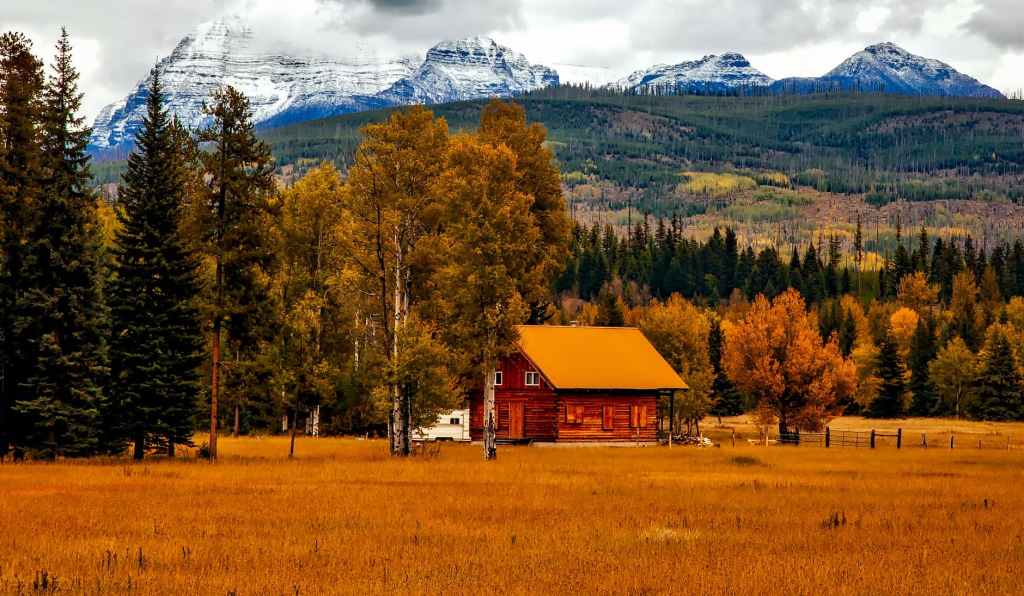
Genesis 3 tells of a paradise shattered, of innocence lost, and of an intimacy with God interrupted by a single choice. “What is this you have done?” the Lord asks, His voice heavy with the weight of love betrayed. And in that moment, humanity’s relationship with God—and with one another—was forever changed.
I find myself reflecting on the fall, not in Eden, but in my own life. A public union of hearts and lives, shared and celebrated, has ended. The first partner I ever called home is now no longer mine. The mighty have fallen, the poets say. Though I am no king, my heart feels the weight of that phrase. How fragile the human spirit is, how vulnerable we are when we give ourselves to another, laying bare our hopes and fears, trusting they will be held with care.
In the aftermath, I have asked myself: Was it love that failed, or was it simply us? Is love eternal, as scripture teaches, or is it fractured by the very human vessels that attempt to carry it? Perhaps it is both. Perhaps love remains pure, even as we stumble under its weight.
“To love at all is to be vulnerable,” C.S. Lewis once wrote. “Love anything, and your heart will be wrung and possibly broken.” To love is to risk the fall, to step into the unknown with faith that the one you hold close will not let go. Yet, sometimes, they do. Or perhaps it is we who loosen our grip, weary from the journey, distracted by our own frailty.
The fall reminds me of surrender—not just to love, but to God, who is love itself. What does it mean to surrender when the heart is broken? It means to offer up the pieces, trusting that the hands that shaped the heavens can also reshape the human heart. It means to acknowledge that the fall is not the end of the story. Eden was lost, but grace abounds. The mighty fall, but the humble are lifted.
In this moment, I see the nature of man: fragile, flawed, often blind to the divine within one another. I see the nature of relationships: mirrors that reflect not only beauty but also brokenness. And I see the nature of love: a call to transcend the fall, to forgive as we are forgiven, to endure as God endures.
Perhaps this is the beginning of a new story—not one of perfect love but of perfecting love. For even in the fall, there is grace. And grace, I am learning, is where healing begins.
-Lele M
Noluntu’s awakening was not gentle. The dreams grew more vivid, her senses sharper. She began to hear whispers in the hum of electricity, see symbols flicker across billboards.
It was on one such night that she met The Mirrorwoman.
The woman appeared in the park near Maboneng, where Noluntu went to clear her thoughts. She was ancient but ageless, wrapped in a cloak of indigo cloth that shimmered like the night sky. Around her neck hung a pendant shaped like a serpent eating its tail.
“You have fire in your blood,” the woman said. “But you have forgotten how to wield it.”
Noluntu stepped back. “Who are you?”
“I am what your mother called isangoma, and what your ancestors called seer. Some would call me witch, but that word was twisted by men who feared women who could see.”
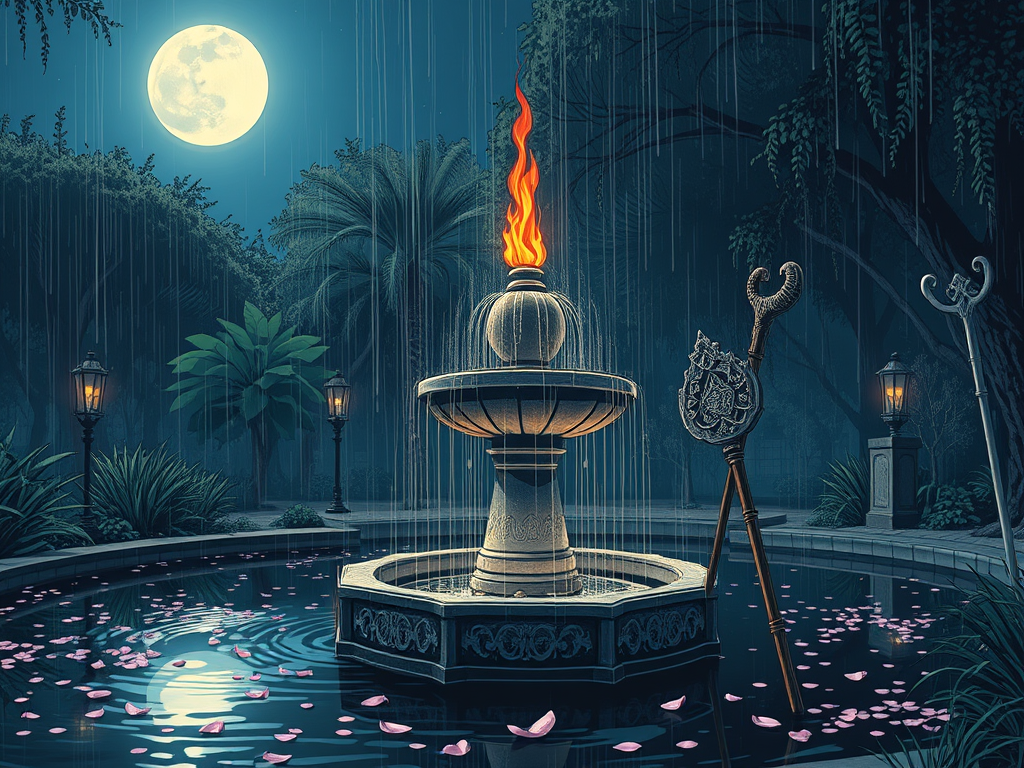
The Mirrorwoman led her to an abandoned fountain, its basin filled with rainwater and fallen petals. “Look,” she commanded.
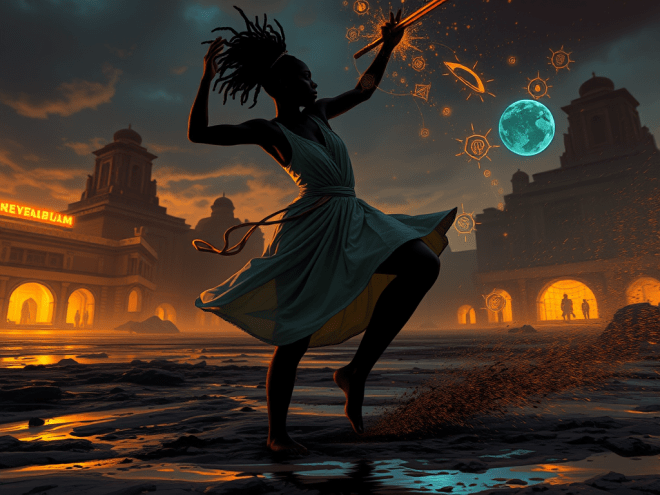
In the water, Noluntu saw herself dancing—not in the present, but in another time. Her body moved with the grace of a ballerina and the power of a warrior. Around her, figures in white sang an ancient hymn in isiXhosa and Hebrew intertwined. She held a staff carved with names. When she looked closer, she saw Asher standing beside her, wearing robes of gold and linen.
The Mirrorwoman smiled. “You and he are bound. Two flames from one covenant. But flame destroys as easily as it warms.”
“Is he—” Noluntu began.
The old woman nodded. “He is of the watchers, child. The ones who guide the chosen back to memory. But beware: not all who watch wish you well.”
When Noluntu looked again, the reflection had changed. The figures were gone. Only fire remained—fire that burned without consuming.
“Witchcraft is not evil,” the woman said. “It is creation unaligned. Power without order. The question is—whose order will you serve?”
That night, Noluntu dreamed of seven doors, each carved with the same serpent-star sigil of The Ring. And behind the last door, a man’s voice whispered: “Africa must burn before it can rise.”
Directed by Michel Gondry
Romantic science fiction.
“How happy is the blameless vestal’s lot! The world forgetting, by the world forgot. Eternal sunshine of the spotless mind! Each pray’r accepted, and each wish resign’d.” – Alexander Pope, Eloisa to Abelard
Written by Charlie Kaufman, this 2004 American romance film also referred to simply as Eternal Sunshine, follows the story of Joel Barish and Clementine Kruczynski. Played by Jim Carrey and Kate Winslet, Joel and Clementine are a separated couple who have erased each other from their memories.
After my first viewing of the film in 2018, I found it to be rather unusual and disorienting. The film employs a nonlinear narrative, along with elements of psychological drama and science fiction which may prove to be a jarring combination for a first-time viewer. I have recently seen the film a second time and I was blown away. Eternal Sunshine, whose title comes from a quotation from the 1717 poem by Alexander Pope, explores themes revolving the nature of memory and romantic love in a compelling sci-fi offering.
Besides the esteemed leading actors, the film boasts an illustrious cast including Kirsten Dunst, Mark Ruffalo, Elijah Wood, and Tom Wilkinson.
I intend to see the film a third time soon, and in the meantime I cannot recommend it enough.
– Lele M
What are good reasons to get into a relationship?

A few weeks ago I had a conversation which has borne this piece. The part of that conversation which made an impression on me was a simple question. What reasons do I have to be in a relationship?
In the first instance, the question presumes the existence (and necessity) of ‘reasons’ to be in a relationship. As such, the question is loaded. Secondly, the word ‘reasons’ requires qualifying. A useful definition would be any causes or motivations. Put differently, what motivates my desire to be in a romantic relationship?
To answer this question, there is as much value in looking outward as there is in looking inward. I prefer to learn from the stories of the people around me. Thus, I contemplate this and other related questions with a dynamic sample of young people throughout the next few weeks.
– Lele M
 Lele Muthali