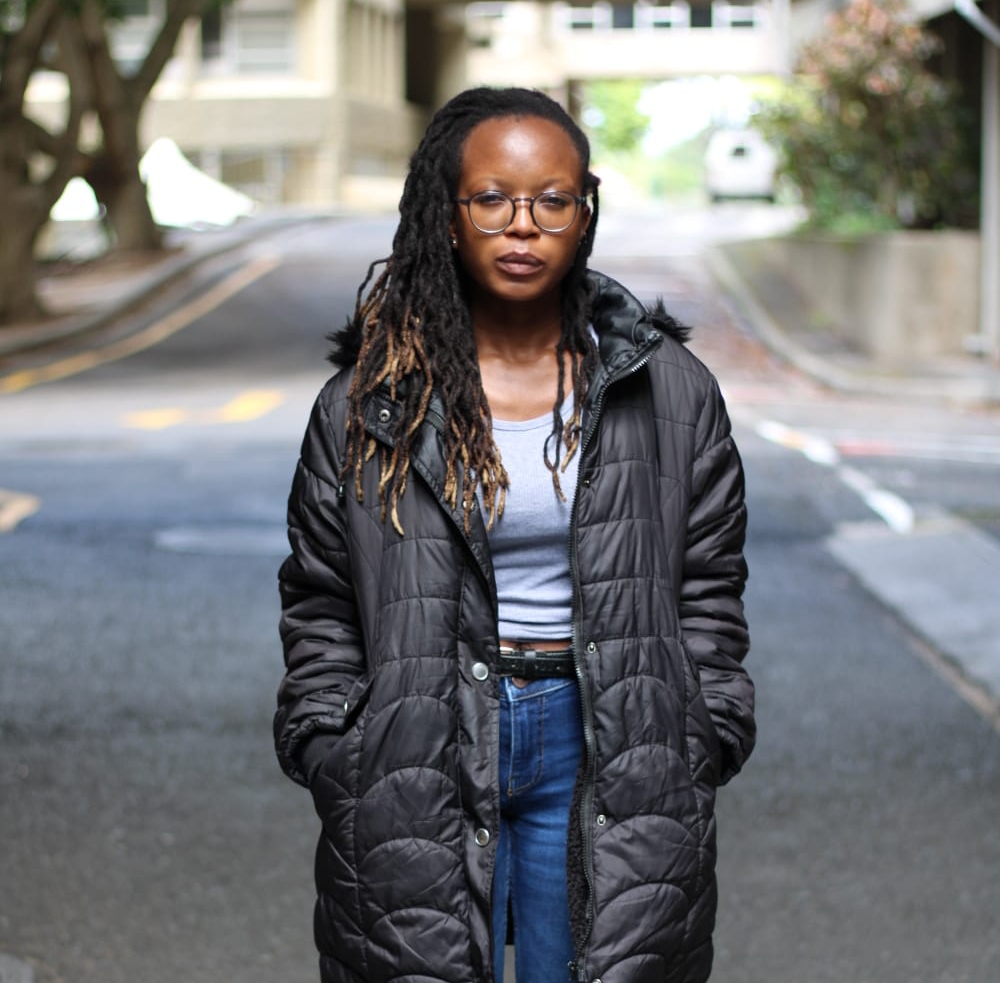
Convicted

17.10.25

If the court summoned me,
and the warrant laid bare my heart,
would the ledger of my life testify
to faith?

Would they count the mornings I linger in dew,
watching light spill over hills?
Could the rustle of leaves
be admitted as witnesses of awe?

Would they catalogue my sins—
the impatience, the small cruelties,
the selfish choices when no one watched,
the grudges nursed like secret debts?
Could I plead repentance,
or only offer trembling defense
in the court of my own conscience?

Would they examine my tattered mercy—
the bread shared, the hand offered,
the whispered forgiveness,
the acts no one knows?
Would the clerk of conscience record
my prayers, never perfect,
always returning?

Would routine stand on the stand—
my morning readings, my journaling,
my gratitude in tea brewed,
my reflection on unseen ways?
Could habits testify to devotion,
discipline born of love, not law?

Would they weigh grace itself—
my reliance on a mercy I do not earn,
my trust in a justice I cannot demand?
Would dependence be indictment,
or evidence of faith itself?

Could they subpoena my laughter,
my tears, my silence, my song,
my yearning for justice, my longing for peace,
my failures and my fear?
Would the court see me stumble toward Him,
even in resistance, even in doubt?

And if the prosecution rested,
I would call the Witness seated above:
the one whose justice bends like mercy,
whose gavel is tempered with love,
whose law is written on hearts.

I would lay my life on the table—
failures, gratitude, longing, obedience,
confessions whispered into wind,
small triumphs unnoticed.

Like Rahab at the gates,
I confess what I have seen and known:
that the Lord is God in heaven above
and on the earth beneath.
Though I am weak, though I falter,
I cannot deny His sovereignty.

Charge me if you must,
count the days, summon the witnesses—
but let the record show:
I stand before the Judge unafraid,
Faith attesting to the love I have lived,
Hope bearing witness to the steps I have faltered,
and Christ, my Advocate, declaring
that in all my imperfect striving,
I have sought, quietly and wholly,
to follow Him.

Joshua 2:11 “When we heard of it, our hearts melted in fear and everyone’s courage failed because of you, for the Lord your God is God in heaven above and on the earth below.”

– Lele

Servant of the Lord

7.10.25

I choose Death, Lord—

and find joy in the dying.

The breaking is gentle,

Your hands are kind.

Where I end,

grace begins—

a stillness, a splendor.

In losing myself,

I meet You fully,

and it is beautiful to be nothing,

but Yours.

-Lele

Chapter VI | The Witch’s Mirror


Noluntu’s awakening was not gentle. The dreams grew more vivid, her senses sharper. She began to hear whispers in the hum of electricity, see symbols flicker across billboards.

It was on one such night that she met The Mirrorwoman.

The woman appeared in the park near Maboneng, where Noluntu went to clear her thoughts. She was ancient but ageless, wrapped in a cloak of indigo cloth that shimmered like the night sky. Around her neck hung a pendant shaped like a serpent eating its tail.


“You have fire in your blood,” the woman said. “But you have forgotten how to wield it.”

Noluntu stepped back. “Who are you?”

“I am what your mother called isangoma, and what your ancestors called seer. Some would call me witch, but that word was twisted by men who feared women who could see.”

The Mirrorwoman led her to an abandoned fountain, its basin filled with rainwater and fallen petals. “Look,” she commanded.

In the water, Noluntu saw herself dancing—not in the present, but in another time. Her body moved with the grace of a ballerina and the power of a warrior. Around her, figures in white sang an ancient hymn in isiXhosa and Hebrew intertwined. She held a staff carved with names. When she looked closer, she saw Asher standing beside her, wearing robes of gold and linen.


The Mirrorwoman smiled. “You and he are bound. Two flames from one covenant. But flame destroys as easily as it warms.”

“Is he—” Noluntu began.

The old woman nodded. “He is of the watchers, child. The ones who guide the chosen back to memory. But beware: not all who watch wish you well.”

When Noluntu looked again, the reflection had changed. The figures were gone. Only fire remained—fire that burned without consuming.

“Witchcraft is not evil,” the woman said. “It is creation unaligned. Power without order. The question is—whose order will you serve?”

That night, Noluntu dreamed of seven doors, each carved with the same serpent-star sigil of The Ring. And behind the last door, a man’s voice whispered: “Africa must burn before it can rise.”


What is “salvation” in culture-speak?

I often feel like I am not enough; not doing enough, moving fast enough, pushing hard enough, praying long enough, worshipping often enough. I have this sentiment in common with most (if not all) the people in the world – past and present.

Isaiah 50:7

Because the Sovereign Lord helps me, I will not be disgraced.
Therefore have I set my face like flint, and I know I will not be put to shame.

It is no wonder then, that popular culture is filled with “self-love” and “you are enough” sloganeering. There is self-help, self-improvement, self-love, and self-affirmation propaganda at every turn. The prevailing presumption seems to be that man is perfectable, and can indeed perfect himself. Ironically, according to culture, the problem can become its own solution. There is no concept of the answer lying outside the self. In fact, “salvation” is a word almost exclusively used in a religious context. Why is that?

I was challenged recently, during a discussion about the four chapter gospel – ‘the fall’, in particular. I was asked to recall an instance when I most felt the effects of sin and the fall. In my chronically overthinking nature, I did not offer an answer because I thought the one I had would come across as flippant and inadequate. Instead, I dove into the deep waters of thought rising steadily to drown out the conversation. So finally I attend to that question here. When have I most felt the effects of sin and the fall? After salvation.

I once heard a pastor remark that if you’re not enjoying sin, you’re doing it wrong. He was speaking about the conviction believers feel when they sin, when they fall short of righteousness. One who does not believe in God and living according to His word is not susceptible to conviction about partaking in sinful behaviour the way a Christian may be.

Indeed the unbeliever does not view their behaviour as sinful at all. They do not accept the Christian standard, thus the question of whether they transgress the bounds of said standard is irrelevant. The pastor was illustrating that willful sin is not worth it. Especially not to the Christian who will spend their time in sin feeling convicted, knowing that they should not be there. That conviction is the beauty of salvation by grace.

Salvation has affirmed that I am not enough, and liberated me with the truth that I don’t have to be. Culture, as they say, could never.

Lele M