Chapter XI | The Dance of Fire


Days later, the city erupted.  

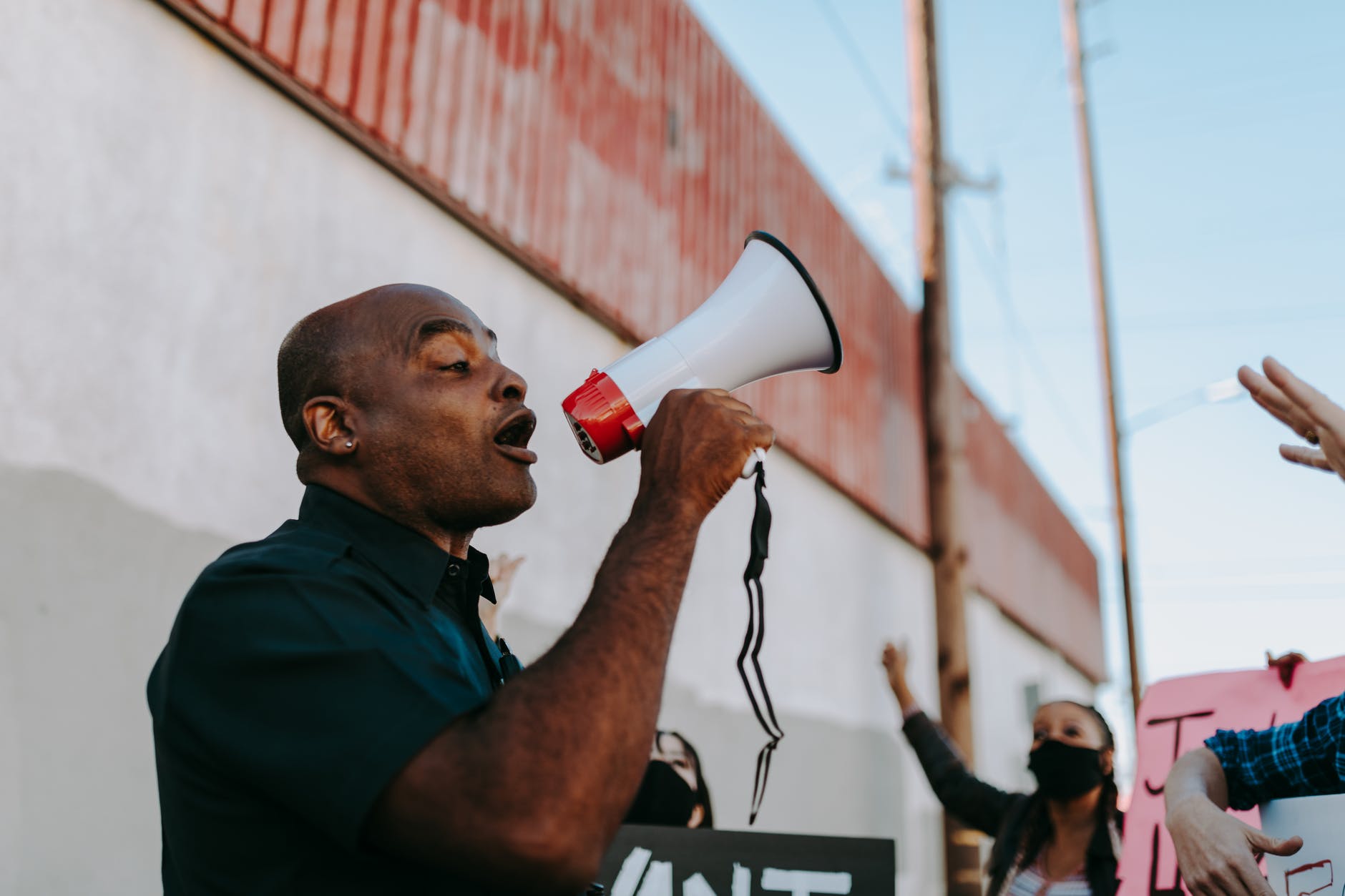
The Rememberers had grown restless. Peaceful marches turned into occupations, then confrontations. Banners bearing the lion sigil of Judáh flew over buildings. Police lines formed. Tear gas mingled with incense.  

Noluntu tried to intervene, but events had outpaced intention. The movement was alive — and wild.  


As she stood on the rooftop of the Newtown depot, lightning split the horizon. Rain poured in sheets. She raised her arms, remembering The Mirrorwoman’s words: Power without order becomes ruin.

Asher appeared behind her, soaked and solemn. “You’re standing where kings once fell,” he said.  

“Then let them rise again,” she replied. 

He touched her shoulder. “You can end this now. Speak the command.”  

She closed her eyes and felt the hum of the continent beneath her feet — the pulse of generations, the memory of water, the cry of buried kingdoms.  

Then she danced.  


It was the dance of the priestess and the warrior, the ballerina and the witch. Each step invoked an element — earth, air, fire, water, spirit — until the storm itself seemed to answer.  

Lightning struck the old train lines, fusing them into a shape: a lion roaring upward. The rain hissed against the fire but could not quench it.  

When she stopped, the city was silent. The violence had ceased. The crowd below knelt as if before an altar.  

Noluntu spoke softly, almost to herself. “We don’t fight for power. We become it.”


Chapter X | The Serpent’s Teeth


The backlash came swiftly.  

News anchors called her a cult leader. Politicians accused her of inciting rebellion. Even old comrades from the liberation struggle condemned her as “a dangerous mystic manipulating youth through witchcraft.”

At first, Noluntu ignored it. But when her closest ally — a journalist named Lindiwe — disappeared after exposing corruption in the energy ministry, silence became complicity.  


That night, Noluntu walked alone through Yeoville, her hood pulled low. Every alley whispered with eyes. She could feel them — watchers, agents, spirits, all converging.  

At the corner of Rockey Street, she found a black car idling. Inside sat a man she recognized: the lawyer who had handled her uncle’s estate.  

He gestured for her to enter. “They know who you are,” he said, voice low. “They’ve been watching you since the funeral.” 

“Who?”  


“The same people your uncle worked for. The Ring. They control half the economy, and now they want your movement silenced.”  

He handed her a folder. Inside were photos — her meetings, her speeches, even her dreams rendered in strange symbols.  

“They fear you because your mother’s prophecy is true,” the man said. “You are the last descendant of the priest-king Zedekiah. And The Ring was built to keep your bloodline hidden.”  

Noluntu felt the air constrict. The serpent symbol. The seven doors. The fire. It all circled back.  

“What happens if I refuse to hide?”  

The lawyer smiled grimly. “Then you’ll have to finish what your uncle began — but this time, cleanse it.”  

As she left, she whispered a prayer that was both invocation and vow:  
“Let no chain be unbroken that truth cannot burn.”


Chapter IIX | The Veil Burns


The transformation was no longer metaphor. The line between waking and vision dissolved.

Noluntu’s eyes saw through time—through empire and dust, through exile and promise. She saw the first temples rise along the Nile, saw priests chanting psalms that would one day echo in Cape Town cathedrals. She saw slaves carried to ships under a red moon, their blood singing the same lament her mother once hummed.


She saw Africa’s glory buried under centuries of forgetting. And she saw it rising—not through politics or power, but through revelation.

When she came to, her book was open again. The page read:
“The veil burns only for those who remember their origin.”

In the following days, strange reports filled the news. Rivers ran backward in Limpopo. Lightning struck Parliament without rain. A mural of a lion appeared overnight on Constitution Hill—signed only with the word Judáh.

People began whispering about a movement led by a mysterious woman who spoke of fire and memory, who preached unity beyond race and creed. They said she could see through lies, heal wounds, read the air itself.


Government officials called her a threat. Churches called her a heretic. The youth called her Mother of the New Dawn.

Asher returned one last time. They met in the ruins of the café where it had all begun.

“Do you love me?” he asked quietly.

She smiled. “You are the mirror I was meant to find. But love is only holy when it serves its purpose. Ours is to remember.”

As he walked away, the wind carried the scent of cedar and flame.

Noluntu stood in the ashes, lifted the book to the sky, and whispered, “Let Judáh rise.”


Chapter VII | The Memory of Water


Weeks passed. Rain returned, flooding the streets until the city became a mirror. Noluntu walked through it barefoot, her reflection rippling like a ghost trying to break free. She’d begun writing again—long, fevered passages about justice, order, divine law.

By now, she had gathered a small circle around her: musicians, writers, young activists disillusioned with politics but hungry for meaning. They met in her loft, where candlelight replaced screens. They called themselves The Rememberers.


They read Scripture, the works of Biko and Fanon, the poetry of Mazisi Kunene, and the proverbs of the desert. They debated democracy and divine kingship, love and liberation, witchcraft and worship.

In these gatherings, Noluntu’s leadership became natural, effortless. Her words carried a quiet authority that both soothed and unsettled. She taught that the true revolution was inward, that Africa’s first colonisation was spiritual.

“God gave us dominion,” she told them one night. “But dominion begins with mastery of self. What good is political freedom if our minds are still enslaved?”

They listened, entranced. Some whispered that she was a prophet. Others feared she was becoming something else entirely.

Asher reappeared, silent as ever. He watched her speak, his eyes full of an unspoken ache. When the others left, he lingered.


“You’re changing,” he said softly.

“So are you.”

He smiled. “You’ve remembered enough to be dangerous.”

She met his gaze. “Then teach me the rest.”

He hesitated. “There are things you can’t unsee. Powers that don’t serve the light you think they do.”

“Light can blind,” she said. “Darkness can reveal.”

For the first time, he looked almost afraid. “Then you’ve already begun the trial.”

Outside, thunder cracked like a drumbeat. Somewhere in the city, a statue of a colonial general collapsed under mysterious fire.


Still I Write

We had broken up.

No contact; because talking would pull us back into the cycles of anger, offense, and defense.

I wrote to you; scribbling urgently on pages until I couldn’t see through the tears that made the dark ink bleed. To soothe my heart, I had committed to writing a letter every time I missed you. Every time I wanted to say something to you, I would say it on paper. After all, I did not need for you to hear or receive it. I simply needed to have shared it.

Several weeks and a full notebook later, I had accumulated a hefty stack of personal confessions, hopes, odes, and prayers. My strategy was working well enough.

And then, for whatever reason… perhaps in my naivety, I sought your acknowledgement of my feelings… I gave you those letters. In between awkward platitudes and under a sky that seemed to hang lower than usual, I handed over to you the thick envelope of my heart.

Something inside me died when I learned that you threw it away. The risk had not even occurred to me. I thought I might never write again. What you did was sacrilegious, it was final, and it was necessary.

In the wrong hands, the depth of my vulnerability is no different from used toilet paper and rotting produce.

Now I write, not to grieve, but to survive.

-Lele M

What a Fall

The fall. A narrative as old as time, woven into the very fabric of creation.

Photo by Pixabay on Pexels.com

Genesis 3 tells of a paradise shattered, of innocence lost, and of an intimacy with God interrupted by a single choice. “What is this you have done?” the Lord asks, His voice heavy with the weight of love betrayed. And in that moment, humanity’s relationship with God—and with one another—was forever changed.

I find myself reflecting on the fall, not in Eden, but in my own life. A public union of hearts and lives, shared and celebrated, has ended. The first partner I ever called home is now no longer mine. The mighty have fallen, the poets say. Though I am no king, my heart feels the weight of that phrase. How fragile the human spirit is, how vulnerable we are when we give ourselves to another, laying bare our hopes and fears, trusting they will be held with care.

In the aftermath, I have asked myself: Was it love that failed, or was it simply us? Is love eternal, as scripture teaches, or is it fractured by the very human vessels that attempt to carry it? Perhaps it is both. Perhaps love remains pure, even as we stumble under its weight.

“To love at all is to be vulnerable,” C.S. Lewis once wrote. “Love anything, and your heart will be wrung and possibly broken.” To love is to risk the fall, to step into the unknown with faith that the one you hold close will not let go. Yet, sometimes, they do. Or perhaps it is we who loosen our grip, weary from the journey, distracted by our own frailty.

The fall reminds me of surrender—not just to love, but to God, who is love itself. What does it mean to surrender when the heart is broken? It means to offer up the pieces, trusting that the hands that shaped the heavens can also reshape the human heart. It means to acknowledge that the fall is not the end of the story. Eden was lost, but grace abounds. The mighty fall, but the humble are lifted.

In this moment, I see the nature of man: fragile, flawed, often blind to the divine within one another. I see the nature of relationships: mirrors that reflect not only beauty but also brokenness. And I see the nature of love: a call to transcend the fall, to forgive as we are forgiven, to endure as God endures.

Perhaps this is the beginning of a new story—not one of perfect love but of perfecting love. For even in the fall, there is grace. And grace, I am learning, is where healing begins.

-Lele M

S v Legality

Photo by Tara Winstead on Pexels.com

This account will contend that the rule of law in South Africa is more than a relic of colonialism. The thrust of this argument is that post-colonial constitutions intentionally and necessarily reconceptualize the role of the rule of law. As such, the post-colonial rule of law assumes a different character and effect than that which it had under colonial rule.

In substantiation, I will first consider the rule of law during apartheid South Africa. This consideration will reveal that the rule of law was compromised under parliamentary sovereignty. Then, to demonstrate the difference of the post-colonial perspective on the rule of law, I will assess South Africa’s effort to reconceptualize the legal principle in the post-apartheid dispensation. This portion of the essay will contrast liberal post-apartheid constitutionalism and transformative constitutionalism. In doing so, I will hold that the former is more persuasive and appropriate in the South African context and democratic constitutionalism.

Legality in the Colony

During apartheid, the legislature enjoyed supremacy above the executive and judiciary. Parliament, as the sovereign legal authority, could create and abolish any law concerning any issue. Legislation passed by parliament could not be invalidated by the courts. The judiciary simply did not have the jurisdiction to challenge legislation. This allowed the racially discriminatory apartheid laws to go unchecked because the legislature governed with absolute discretion. In this way, the governance structure of the apartheid regime severely compromised the principle of the rule of law. Consequently, parliamentary sovereignty grossly undermined justice.      

On the other hand, constitutionalism attempts to avert arbitrary government such as exercised by the apartheid regime. Constitutionalism proposes government by the constitution. Thus, constitutionalism, as an instrument to curb arbitrary government, aligns with the inner morality of law[1]. According to this understanding, laws must be (inter alia) publicly promulgated, clear, and equally enforced.

Additionally, the function of democracy in constitutionalism is key. Democracy legitimises constitutional rule because the legislature is constituted by democratically elected representatives of the voting populace. The duly elected parliament represents the diverse interests, experiences, and ambitions of a variety of constituencies. As such, the laws passed by an elected legislature are a reflection (albeit imperfect) of the needs, values and will of the people. Therefore, constitutionalism in a democratic framework not only facilitates but also protects the notion of popular self-government.

Democratic constitutionalism then, relies heavily on the rule of law. This ‘rule’ refers to the principle that no person or institution is above the law. In a democracy, this principle is paramount.

Post-apartheid Constitutionalism

The rule of law in terms of the post-apartheid constitutions is more than a legacy of colonialism. In this, I agree with Upendra Baxi[2]. Colonialism is part of the history of the rule of law in former colonies and thus influences post-colonial constitutions. However, it is also more complex than that. Post-apartheid constitutions are responsive documents. They are unapologetically written as tools for the achievement of a desired end. This end is typically informed by several factors, including the country’s socio-political history as a colony, its current reality, its vision for the future, and place among the global community of nations.

In South Africa the rule of law is a crucial founding tenet of the Republic. It is provided for in the very first section of the Constitution – s1(c). The authors of the Constitution placed the rule of law among important founding values including human dignity s1(a), non-racialism s1(b), and constitutional supremacy s1(c). The provision entrenching the rule of law appears immediately alongside constitutional sovereignty. It is no coincidence that the principle of legality enjoys a prominent position. Not only does this indicate the lawmakers’ esteemed view of the principle of the rule of law and its centrality in characterising the Republic. It also communicates a clear intention to bind South Africa to this principle fundamentally.

The primacy of the rule of law in the Constitution is perspicuous and uncontroversial. The rule of law as adumbrated in the Constitution is part of the very definition of South Africa. For this reason, understanding the prevailing judicial perception of the rule of law is paramount. It informs the application and operation of the principle of the rule of law in post-apartheid South African courts. Here, the main contending conceptions of the rule of law in South Africa are transformative constitutionalism, and liberal post-apartheid constitutionalism.

Considering the Postcolonial Conflict

The rule of law as envisaged by the drafters of the Constitution differs radically from that of the preceding founding national documents (of 1909, 1961, 1983) in conception and application. The rule of law under Apartheid was used to meet the political ends of the totalitarian regime. The sovereign legislature of the time weaponised the rule of law by passing overtly racist legislation. This discriminatory legislation was potent because the judiciary was 1) not able to challenge policy and declare legislation invalid, and 2) able to use the rule of law as a makeshift shield to avoid deliberating on the substance and validity of apartheid legislation. Rather than conscientiously adjudicatory, the role of the judiciary was administrative. Judges were discouraged from independent adjudication. Under parliamentary sovereignty, the court could not declare laws to be invalid. All laws validly passed by parliament were enforceable. Thus, judges were able to cite the principle of the rule of law in adjudication to uphold and enforce apartheid legislation.

A full procedural revolution is described as involving the rejection and removal of an established government and the successful establishment of a new order. This traditional conception of a revolution requires the use of extra-constitutional means to revolt against the establishment. In this way, a ‘legal revolution’ is a contradiction in terms. As a founding provision of the Republic in the Constitution, the rule of law is not extra-constitutional. Inherently, it is not revolutionary arsenal. The rule of law alone as contemplated in the Constitution does not facilitate revolt and cannot revolutionise South Africa.

Moreover, this is preferrable. Not only is the rule of law, as a legal principle, technically unable to revolutionise South Africa. It is also best that it cannot, and indeed does not, overthrow the South African order. South Africa [needs] reform rather than revolution. The country is a young post-colonial democracy and is susceptible to the pitfalls similarly faced by countries which emerge as democratic post-colonies. The challenges faced by India’s post-colonial constitutionality and cited by Baxi are but one example. Judicial constraints are crucial in post-colonies. To avoid the abuse of power in an already vulnerable society, South Africa’s approach to the principle of legality ought to rely more on time-tested structures and processes rather than intervention. Thus, the prudence of liberal-conservative post-apartheid constitutionalism is more appropriate.

Post-apartheid constitutionalism requires prudence, not despite South Africa’s history but because of it. We ought to be prudent and ‘constrained’ particularly considering previous abuses of the law and judicial power in South Africa. The ‘constrained vision’[3] contemplated by economist and social theorist Dr Thomas Sowell refers broadly to a view of the world which is guided by the principle of prudence, and belief in checks and balances.

The constrained vision is reflected in South Africa’s legal culture as liberal-conservative post-apartheid constitutionalism. This liberal-conservative view is often misconstrued as ineffective, archaic, and inflexible. This is an inaccurate representation of liberal-conservatism. The liberal-conservative constitutionalist is not opposed to change, or conscientious adjudication.

Instead, the liberal-conservative constitutionalist is guided by the principles of precedence and prescription. He believes, as Burke did, that “the individual is foolish, the species is wise.” As such, the liberal-conservative constitutionalist adheres to custom, convention, and continuity. He understands that permanence and change are equally crucial to the development of South Africa’s postcolonial constitutional democracy. Thus, both permanence and change must be acknowledged and reconciled in a vibrant society[4].

The ‘unconstrained vision’[5] is reflected in South Africa as transformative constitutionalism. Although transformative constitutionalism is characteristically amorphous, it is broadly predicated on the vision espoused in the epilogue of the Interim Constitution[6]. This vision imagines a new South African society based on substantive equality. Transformative constitutionalism, then, is an outcomes-based approach. It is concerned with transformation which has been described by former Chief Justice Pius Langa as “a social and economic revolution”. This consequentialist application of the Constitution fundamentally seeks ‘transformative’ ends and substantive equality[7] – also referred to as ‘equality of outcome’.

Notably, the post-apartheid legal order must be based on persuasion, rather than coercion. To this end, South Africa’s post-apartheid legal culture has gradually become a culture of judicial justification. A culture of judicial justification refers to the notion that legitimate leadership and governance is assessed through the merit of the case argued in defence of its pronouncements. On the other hand, the culture of judicial authority during the apartheid era legitimated leadership through fear entrenched by the force of its command.

This compelling shift to judicial justification is most compatible with liberal-conservative constitutionalism rather than transformative constitutionalism. The liberal-conservative constitutionalist perceives the need for prudent restraints on power and human passions, regardless of good intentions. As such, he is beholden to a stricter standard of justification which maintains “a healthy tension between the claims of authority and the claims of liberty[8].”

On the other hand, transformative constitutionalism presents the counter-majoritarian dilemma. This dilemma refers to a tension caused by the influence which unelected judges have on the effect of legislation passed by a duly elected legislature. The dilemma is concerned with the extent to which judges play a role in ‘making law’. Although adjudication presents a legitimate and necessary opportunity to develop law and policy. The counter-majoritarian dilemma sees a potential redundancy in the democratic election of lawmakers where judges are also allowed the discretion to prescribe certain policy outcomes according to the interests of certain groups.

As mentioned earlier, transformative constitutionalism is a judicial approach which is primarily concerned with specific (transformative) outcomes of legislation. The ‘transformative’ and even ‘revolutionary’ adjudication contemplated by this view stands to undermine the democratic process as a legitimate expression of the will of the people. As Sowell argues, even judges are not immune to the influence of power and therefore cannot legitimately act as “surrogate decision-makers” in a society where the popular vote already elects representatives to make policy decisions. This exposes the potentially perilous nature of transformative constitutionalism in South Africa’s judiciary.

Instead, a liberal-conservative approach relies heavily on democratic constitutionalism in the legislature rather than transformative constitutionalism in the judiciary. It recognises that the two cannot coexist comfortably for long before grave tensions arise. This prudent approach does not only protect democracy by preferring constraints on judicial power. It is also concordant with the separation of powers, and the principle of the rule of law.

– Lele M

Bibliography

Baxi, Upendra. ‘Post-colonial Legality: A Postscript from India’. Warwick: Verfassung und Recht in Ubersee VRU 45, 2012.

Edwards, Pamela. ‘Permanence and Progression: The Statesman’s Science: History, Nature, and Law in the Political Thought of Samuel Taylor Coleridge. New York: Columbia University Press, 2004.

Kirk, Russell. ‘The Politics of Prudence’. Intercollegiate Studies Institute, 2014.

Langa, Pius. ‘Transformative Constitutionalism’. Stellenbosch: 17 Stellenbosch L. Rev 351, 2006.

Sowell, Thomas. ‘A Conflict of Visions: Ideological Origins of Political Struggles’. New York: W. Morrow, 1987.


[1] Developed by Lon Fuller

[2] U Baxi ‘Chapter 28: Postcolonial legality’ in H Schwarz and S Ray (eds) A companion to postcolonial studies

[3] The constrained (tragic) vision relies on the belief that human nature is essentially unchanging and that man is naturally inherently self-interested, regardless of the best intentions. Those with a constrained vision prefer the systematic processes of the rule of law and experience of tradition. Compromise is essential because there are no ideal solutions, only trade-offs.

[4] Pamela Edwards in ‘Permanence and Progression’

[5] The unconstrained (utopian) vision relies on the belief that human nature is essentially good. Those with an unconstrained vision distrust decentralized processes and are impatient with large institutions and systemic processes that constrain human action. They believe there is an ideal solution to every problem, and that compromise is never acceptable.

[6] “a historic bridge between the past of a deeply divided society characterised by strife, conflict, untold suffering and injustice, and a future founded on the recognition of human rights, democracy and peaceful co-existence and development opportunities for all South Africans, irrespective of colour, race, class, belief or sex”.

[7] Pius Langa in ‘Transformative Constitutionalism’

[8] Russell Kirk in ‘Politics of Prudence’

The Unconstrained Rainbow

Is the (radical) left likely to ever win an election?

Photo by RODNAE Productions on Pexels.com

According to Thomas Sowell, in ‘A Conflict of Visions’, one of the two broad visions that underlie conflict in the world is the unconstrained vision. This vision sees human beings as capable of moral and social improvement.

Problems such as inequality and injustice are not permanent but can be overcome through reason, willpower, and transformative reform. Institutions and traditions are often seen as obstacles to progress. In South Africa, the popularity of the unconstrained vision is most evident in the growth and philosophy of political players such as the Economic Freedom Fighters, and Black First Land First.

How do the philosophies of these parties represent the unconstrained vision?

The unconstrained vision believes more in revolution than it does in reform. According to the unconstrained vision, current institutions and systems immanently problematic. They were designed that way. As a result, equal opportunity is not enough. Proponents of the unconstrained vision believe in such things as distributive justice – redistribution of wealth in the pursuit of ‘cosmic justice’ (Thomas Sowell).

The unconstrained vision sees the current sociopolitical and even economic systems as inherently flawed and proposes a solution which typically involves increased state capacity, state intervention, and state control of resources. As a result, the state in the unconstrained conception enjoys a more authoritarian role.

Why is leftist rhetoric attractive to South Africans?

Well, ideas on the far left of the economic spectrum tend to be utopian. South Africa has a population of over fifty million. As of 2016, the National Census reported 80.7% of people in South Africa were Black Africans, 8.7% were coloured, 8.1% were white, and 2.5 were Indian/Asian.

Meanwhile, the Marxist nature of the ideas on the South African left offer the vindication of naming and shaming the villain – the oppressor. The top five political parties according to the 2019 national election results were as follows. The African National Congress (ANC) enjoys first position at 57.5%, followed by the Democratic Alliance (DA) at 20.8%, the Economic Freedom Fighters (EFF) at 10.8%, the Inkatha Freedom Party (IFP) at 3.4%, and at number five is the Freedom Front Plus (FF+) at 2.4%.

Do South African’s necessarily find the unconstrained vision to be more persuasive?

Distinctively, the provincial election results of the Western Cape provide a contrasting picture. The DA takes the prime spot at 55.5%, the ANC comes in second at 28.6%, followed by the EFF at 4%, the GOOD party at 3%, and the African Christian Democratic Party (ACDP) also at 3%.

The Western Cape is of particular interest to me because (although it accounts for 11.3% of the national populace) the population demographics depict an interesting contrast to the national picture. The Western Cape is home to the largest population of coloured (47.5%), and white (16%) South Africans, across all provinces. Meanwhile, compared to the rest of the provinces, the same province is home to the lowest population of black Africans (35.7%) in South Africa.

Differences in language, religion, class, orphanhood, and education make these questions more complex and all the more worthy of attention. I’m curious to learn about and understand the peoples of this country. Who are they really? How do they live? What do they want?

I learned that every political question begins with a map, or a census. So let’s talk about it. What do all these figures mean? How, if at all, do they represent a contention of visions?

These are the questions I explore in the conversation which continues on the podcast. Join me there!

– Lele M