Chapter XI | The Dance of Fire


Days later, the city erupted.  

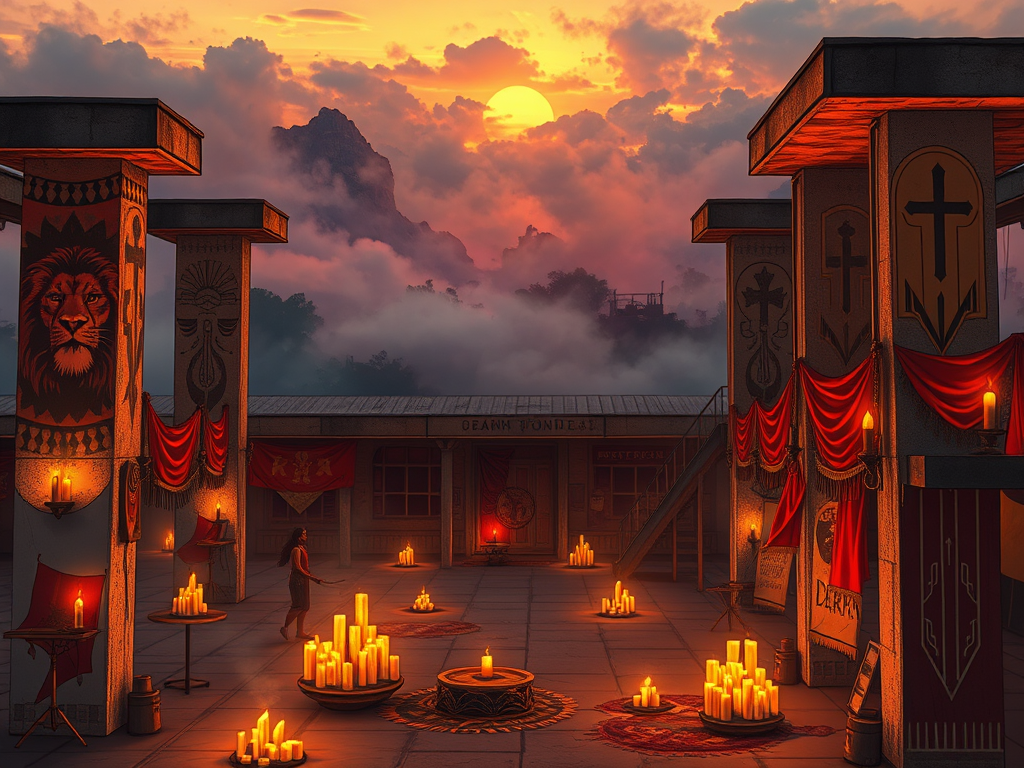
The Rememberers had grown restless. Peaceful marches turned into occupations, then confrontations. Banners bearing the lion sigil of Judáh flew over buildings. Police lines formed. Tear gas mingled with incense.  

Noluntu tried to intervene, but events had outpaced intention. The movement was alive — and wild.  
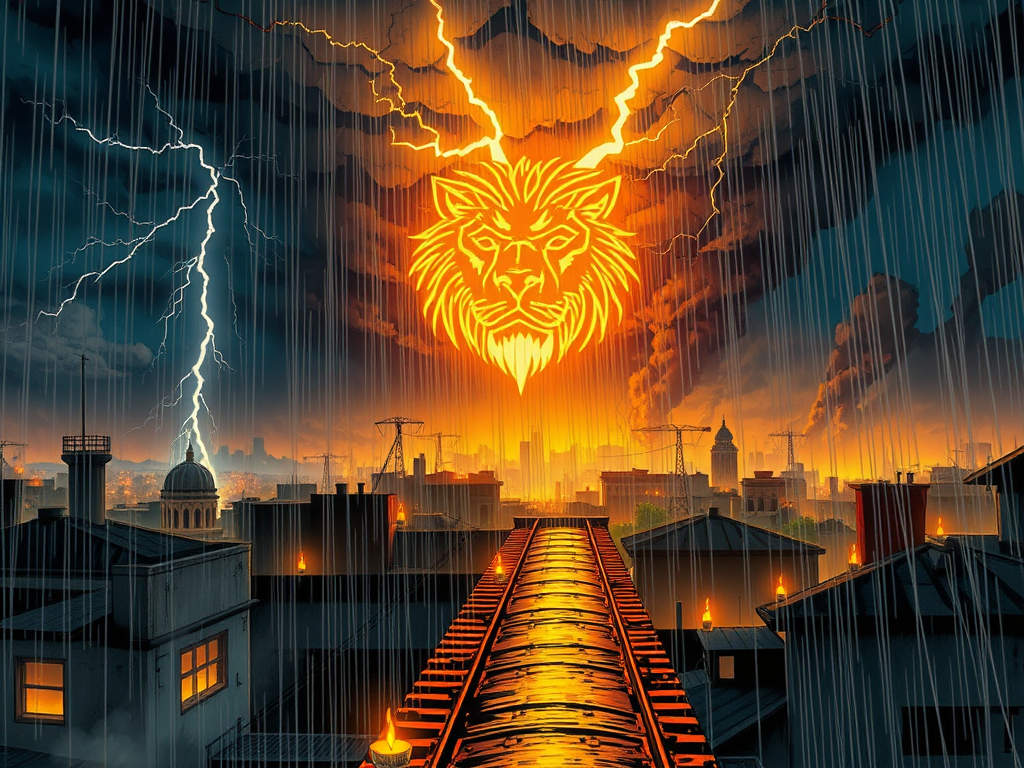


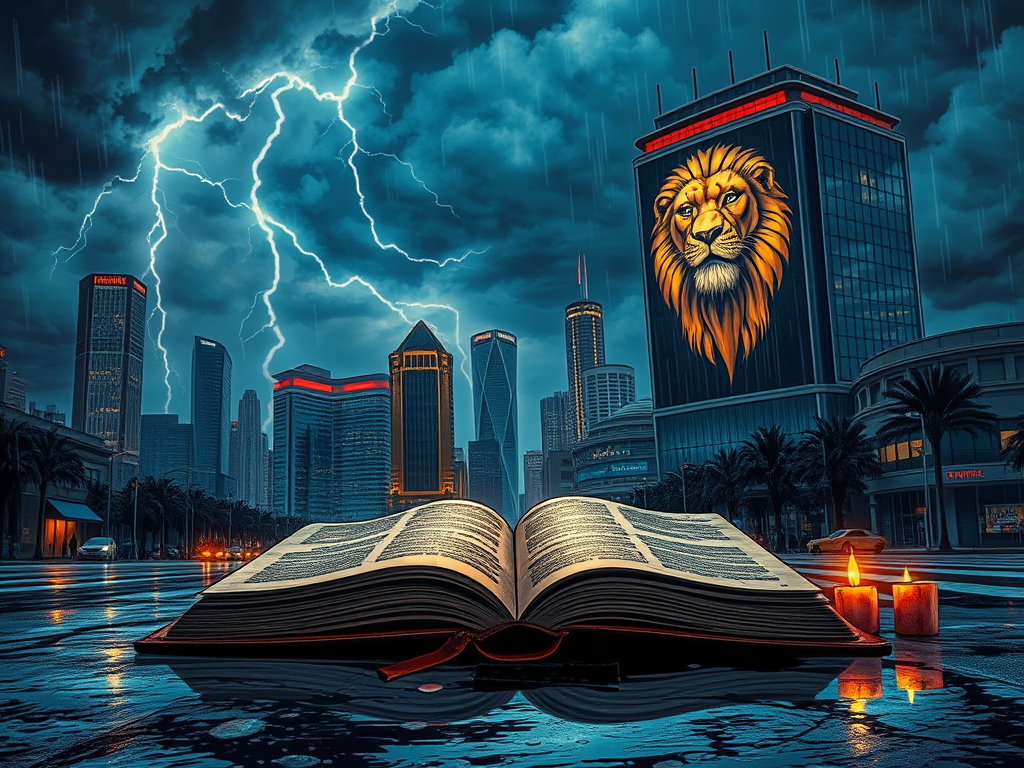
As she stood on the rooftop of the Newtown depot, lightning split the horizon. Rain poured in sheets. She raised her arms, remembering The Mirrorwoman’s words: Power without order becomes ruin.

Asher appeared behind her, soaked and solemn. “You’re standing where kings once fell,” he said.  

“Then let them rise again,” she replied. 

He touched her shoulder. “You can end this now. Speak the command.”  

She closed her eyes and felt the hum of the continent beneath her feet — the pulse of generations, the memory of water, the cry of buried kingdoms.  

Then she danced.  
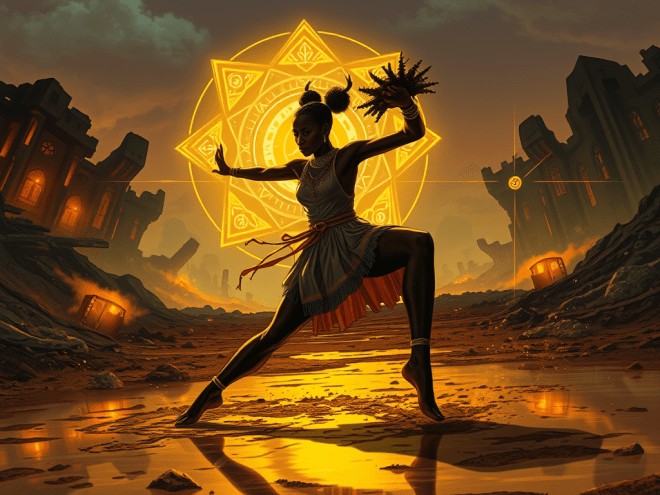


It was the dance of the priestess and the warrior, the ballerina and the witch. Each step invoked an element — earth, air, fire, water, spirit — until the storm itself seemed to answer.  

Lightning struck the old train lines, fusing them into a shape: a lion roaring upward. The rain hissed against the fire but could not quench it.  

When she stopped, the city was silent. The violence had ceased. The crowd below knelt as if before an altar.  

Noluntu spoke softly, almost to herself. “We don’t fight for power. We become it.”

Chapter X | The Serpent’s Teeth


The backlash came swiftly.  

News anchors called her a cult leader. Politicians accused her of inciting rebellion. Even old comrades from the liberation struggle condemned her as “a dangerous mystic manipulating youth through witchcraft.”

At first, Noluntu ignored it. But when her closest ally — a journalist named Lindiwe — disappeared after exposing corruption in the energy ministry, silence became complicity.  


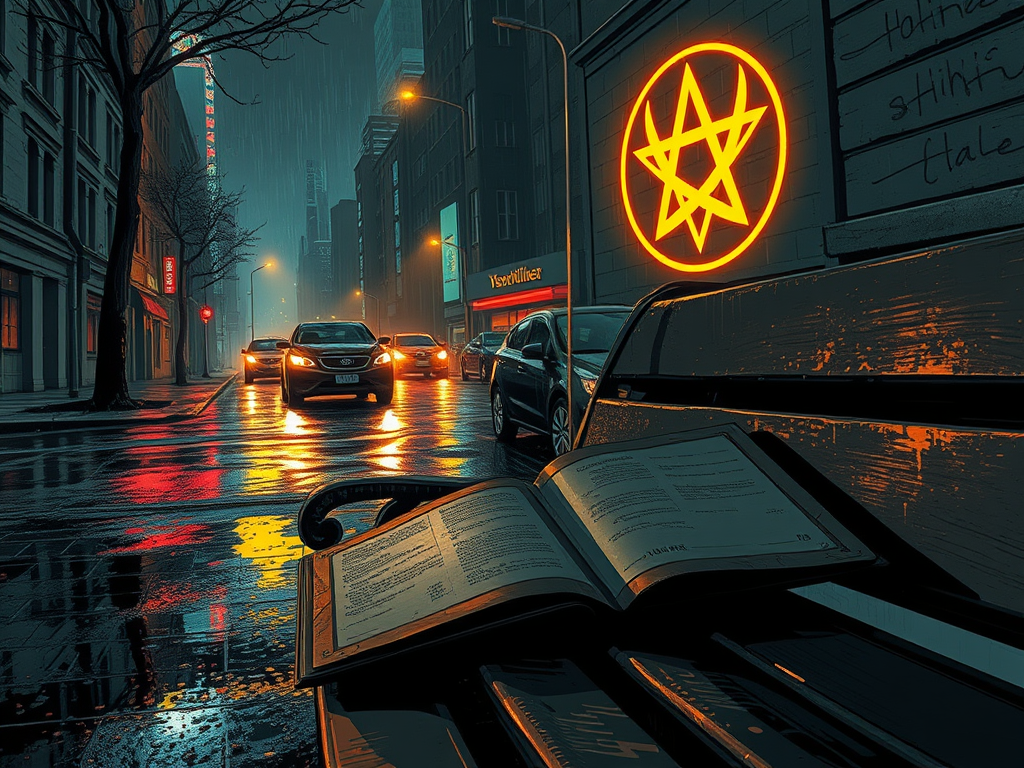
That night, Noluntu walked alone through Yeoville, her hood pulled low. Every alley whispered with eyes. She could feel them — watchers, agents, spirits, all converging.  

At the corner of Rockey Street, she found a black car idling. Inside sat a man she recognized: the lawyer who had handled her uncle’s estate.  

He gestured for her to enter. “They know who you are,” he said, voice low. “They’ve been watching you since the funeral.” 

“Who?”  


“The same people your uncle worked for. The Ring. They control half the economy, and now they want your movement silenced.”  

He handed her a folder. Inside were photos — her meetings, her speeches, even her dreams rendered in strange symbols.  

“They fear you because your mother’s prophecy is true,” the man said. “You are the last descendant of the priest-king Zedekiah. And The Ring was built to keep your bloodline hidden.”  

Noluntu felt the air constrict. The serpent symbol. The seven doors. The fire. It all circled back.  

“What happens if I refuse to hide?”  

The lawyer smiled grimly. “Then you’ll have to finish what your uncle began — but this time, cleanse it.”  

As she left, she whispered a prayer that was both invocation and vow:  
“Let no chain be unbroken that truth cannot burn.”


Chapter IX | The Lion’s Breath


Morning broke like prophecy. A thin mist veiled Johannesburg, softening its edges until the city seemed less concrete, more dream. In that dawn, Noluntu understood that her life had crossed a threshold — not the end of the world, but the beginning of remembrance.


Her book was now a living thing. Its words rearranged themselves with each reading, as if responding to her heartbeat. Passages that once spoke of despair now shimmered with revelation.  

She read: “When the lion breathes upon the mountain, every false god will tremble.”

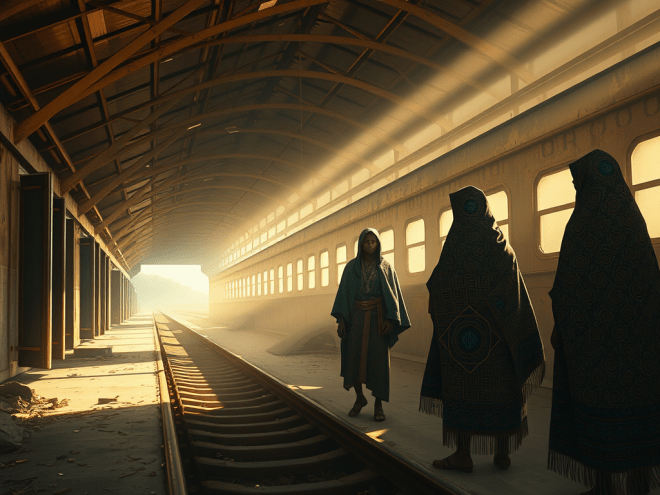
That day, she gathered The Rememberers again — now grown to hundreds, a tide of artists, coders, healers, and visionaries. They met at the disused rail depot in Newtown, now covered in murals and banners. The air pulsed with drums and song.


“We are not starting a revolution,” Noluntu said, standing before them. “We are remembering one that began before nations were born.”  

She spoke not as a politician, but as something older — a voice of rhythm, of justice, of fierce tenderness. She spoke of the African future as a spiritual inheritance, of a continent once priestly, now reclaiming its forgotten anointing.  

A hush fell when she raised her hands. “This is not about vengeance,” she said. “It’s about balance. About healing what was fractured — in land, in lineage, in soul.”  

Someone in the crowd shouted, “Amandla!” 
Noluntu smiled. “Amandla ngentobeko — power with humility.”

That night, under the new moon, the movement was born — The Covenant of Judáh. 


It spread faster than fire, carried through encrypted networks and whispered prayers. Artists turned songs into sermons, hackers defied surveillance, healers opened sanctuaries. Noluntu’s name became code for hope.

But hope, as history knew, never rose unchallenged.

Chapter IIX | The Veil Burns


The transformation was no longer metaphor. The line between waking and vision dissolved.

Noluntu’s eyes saw through time—through empire and dust, through exile and promise. She saw the first temples rise along the Nile, saw priests chanting psalms that would one day echo in Cape Town cathedrals. She saw slaves carried to ships under a red moon, their blood singing the same lament her mother once hummed.


She saw Africa’s glory buried under centuries of forgetting. And she saw it rising—not through politics or power, but through revelation.

When she came to, her book was open again. The page read:
“The veil burns only for those who remember their origin.”

In the following days, strange reports filled the news. Rivers ran backward in Limpopo. Lightning struck Parliament without rain. A mural of a lion appeared overnight on Constitution Hill—signed only with the word Judáh.

People began whispering about a movement led by a mysterious woman who spoke of fire and memory, who preached unity beyond race and creed. They said she could see through lies, heal wounds, read the air itself.


Government officials called her a threat. Churches called her a heretic. The youth called her Mother of the New Dawn.

Asher returned one last time. They met in the ruins of the café where it had all begun.

“Do you love me?” he asked quietly.

She smiled. “You are the mirror I was meant to find. But love is only holy when it serves its purpose. Ours is to remember.”

As he walked away, the wind carried the scent of cedar and flame.

Noluntu stood in the ashes, lifted the book to the sky, and whispered, “Let Judáh rise.”


Chapter VII | The Memory of Water


Weeks passed. Rain returned, flooding the streets until the city became a mirror. Noluntu walked through it barefoot, her reflection rippling like a ghost trying to break free. She’d begun writing again—long, fevered passages about justice, order, divine law.

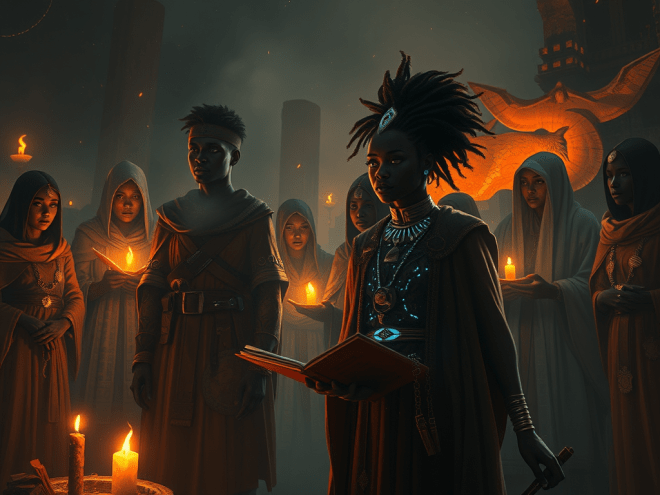
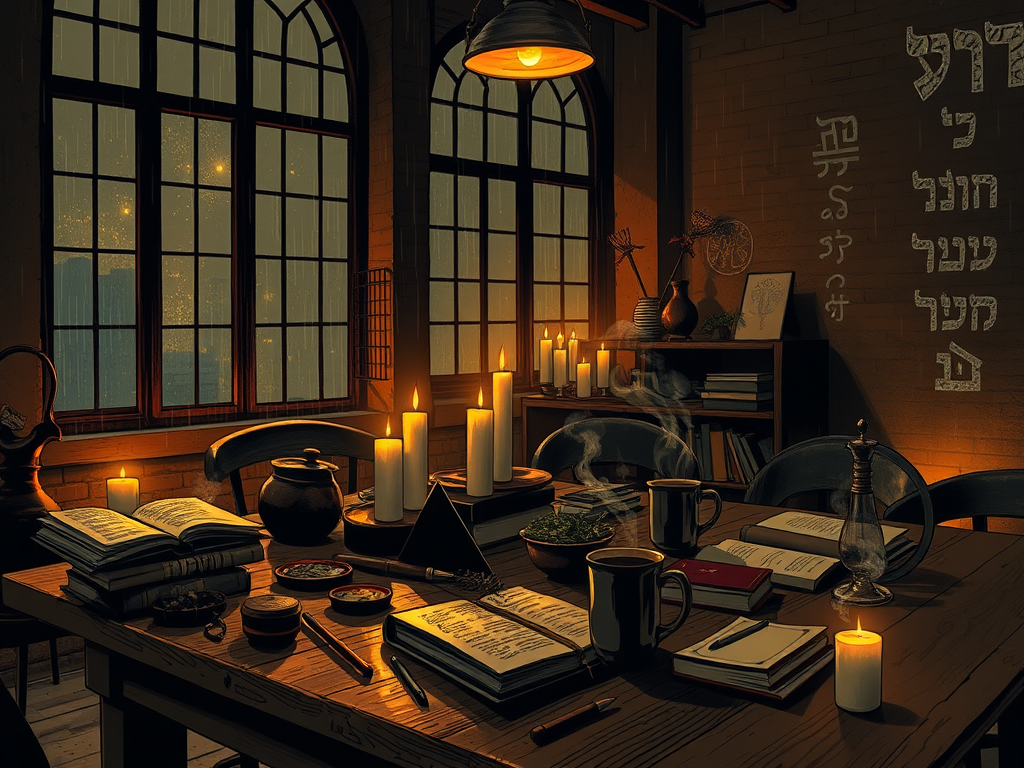
By now, she had gathered a small circle around her: musicians, writers, young activists disillusioned with politics but hungry for meaning. They met in her loft, where candlelight replaced screens. They called themselves The Rememberers.


They read Scripture, the works of Biko and Fanon, the poetry of Mazisi Kunene, and the proverbs of the desert. They debated democracy and divine kingship, love and liberation, witchcraft and worship.

In these gatherings, Noluntu’s leadership became natural, effortless. Her words carried a quiet authority that both soothed and unsettled. She taught that the true revolution was inward, that Africa’s first colonisation was spiritual.

“God gave us dominion,” she told them one night. “But dominion begins with mastery of self. What good is political freedom if our minds are still enslaved?”

They listened, entranced. Some whispered that she was a prophet. Others feared she was becoming something else entirely.

Asher reappeared, silent as ever. He watched her speak, his eyes full of an unspoken ache. When the others left, he lingered.


“You’re changing,” he said softly.

“So are you.”

He smiled. “You’ve remembered enough to be dangerous.”

She met his gaze. “Then teach me the rest.”

He hesitated. “There are things you can’t unsee. Powers that don’t serve the light you think they do.”

“Light can blind,” she said. “Darkness can reveal.”

For the first time, he looked almost afraid. “Then you’ve already begun the trial.”

Outside, thunder cracked like a drumbeat. Somewhere in the city, a statue of a colonial general collapsed under mysterious fire.