Prayer and Peace

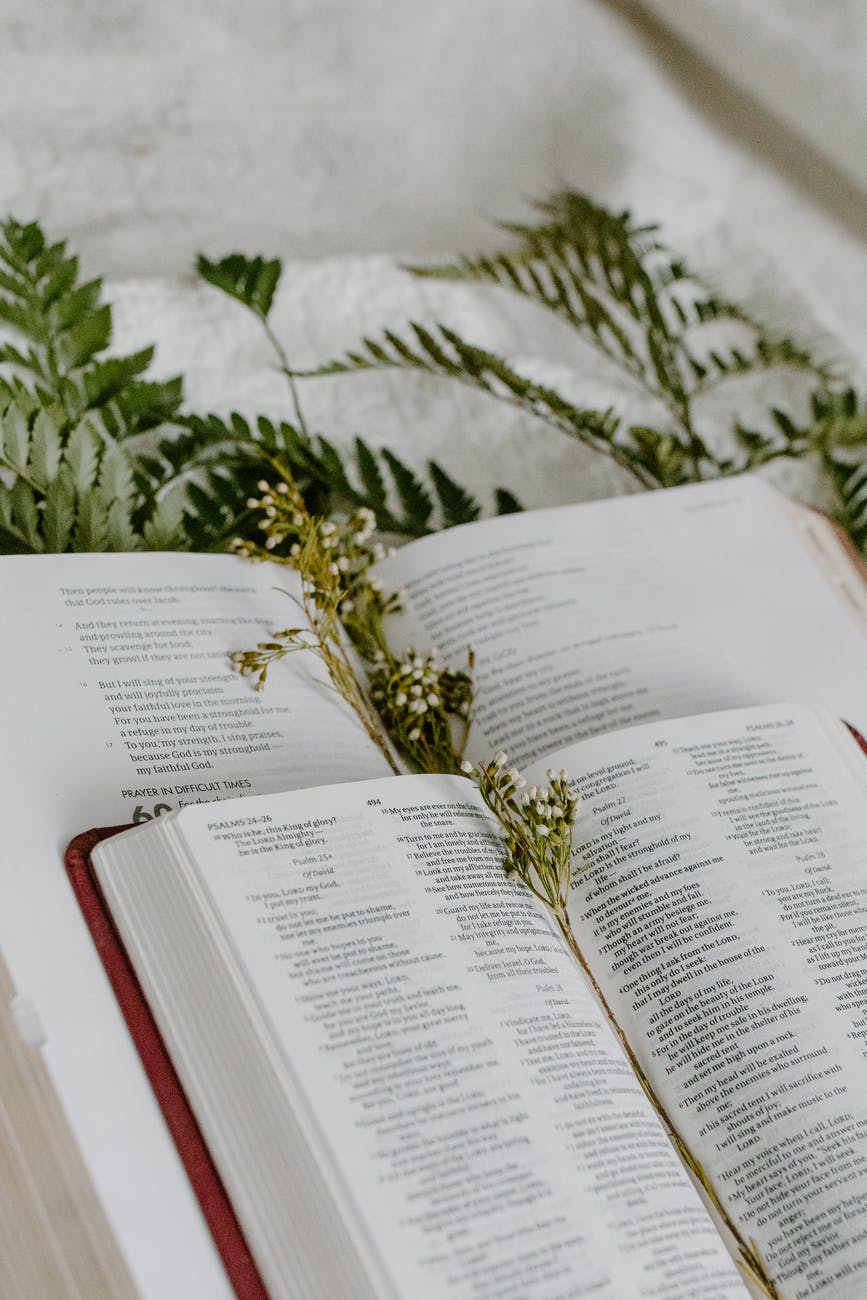
Photo by Tara Winstead on Pexels.com

Prayer is rooted in the belief that there is a power greater than oneself that can influence one’s life. The Latin word from which “prayer” is derived means “obtained by begging, to entreat.”

There is no set way to pray. Prayer has a very personal meaning arising from an individual’s religious background or spiritual practice. For some, prayer will mean specific sacred words; for others, it may be a more informal talking or listening to God or a higher power. 

My own prayers are typically spoken prayers, silent prayers, and prayers of the mind, the heart, and what I can best describe as ‘union with God’. Prayers take different forms; they may be directed (with a specific outcome in mind) or non-directed. They may be intercessory, contemplative, meditative or petition.

Though what is true about prayer across the board is that it helps improve my spiritual health. Prayer helps me develop a relationship with God [1], helps me gain an understanding of God’s loving nature [2], and provides answers [3]. Prayer also helps me find direction in my life [4], gives me strength to avoid temptation [5]. 

Prayer invites the Holy Spirit into my life [6], aligns my will with God’s will [7], and helps me become more like Jesus [8]. Along with fasting, prayer helps me accept God’s will [9]. 

Moreover, prayer improves my overall wellbeing. I was surprised to learn that there has been research conducted on this issue. The research concludes that prayer can calm one’s nervous system, shutting down the fight or flight response. It can make one less reactive to negative emotions and less angry.


When prayer uplifts or calms, it inhibits the release of cortisol and other hormones, thus reducing the negative impact of stress on the immune system and promoting healing.

Ultimately, prayer begets peace. It elicits the relaxation response, which lowers blood pressure and other factors heightened by stress. It also releases control to something greater than oneself, which can reduce the stress of needing to be in charge.

Prayer brings a sense of a spiritual or loving presence and alignment with God which elicits feelings of gratitude, compassion, forgiveness, and hope, all of which are associated with healing and wellness.

– Lele M

Notes:

[1] Just like my parents here on earth, my Heavenly Father wants to hear from me and talk to me. When I pray, He listens. Then He answers my prayers.

[2] The scriptures teach, “God is love” (1 John 4:8). I can feel that love as I speak daily with Him through prayer, seeking His guidance in my life.

[3] Praying and listening to the answers God gives me can help me better understand my purpose in life.

[4] When I privately pray to God, I can work through serious decisions in my life. God always listens and often provides the specific answers and guidance we seek. Even when He chooses not to answer immediately or in the way we might have hoped, prayer itself is a way to find peace.

[5] Jesus counseled His disciples, “Watch and pray, that ye enter not into temptation” (Matthew 26:41). Through prayer, I can overcome temptations to sin. Praying for God’s help to keep me from making wrong choices gives me the strength to do what is right.

[6] As I pray daily, I invite the Holy Spirit to be with me and to comfort and direct me. The Holy Spirit can give me answers, help me feel God’s love, and bring feelings of peace and joy into my heart.

[7] The purpose of prayer is not necessarily to tell God how I want Him to do things. Rather, it’s to better understand Him and His ways, bringing myself into alignment with His will. As C.S. Lewis is often attributed as saying, prayer “doesn’t change God. It changes me.”

[8] Jesus set the perfect example of prayer. If I try to follow His example through prayer, I will become more like Him and develop a better relationship with Him and Heavenly Father.

[9] Jesus fasted for 40 days and 40 nights before He began His ministry on the earth. As He did this, He communed with God in prayer. Likewise, when I pray and fast, I feel closer to God and better understand the things He wants me to do.

https://www.takingcharge.csh.umn.edu/prayer#:~:text=Healing%20presence%20%2D%20prayer%20can%20bring,associated%20with%20healing%20and%20wellness.

The Science of Prayer

Let’s Talk Femininity

“I believe a woman, in order to be a good wife, must be (among other things) both sensual and maternal.” – Elisabeth Elliot, Let Me Be a Woman

Photo by Tara Winstead on Pexels.com

Over the past two years I have been consuming a significant amount of content surrounding femininity, homemaking, and womanhood. I hadn’t been taught how or what it meant to be woman, much less feminine and woman. And as I grew older and became a staunch feminist, I was not interested in learning. Now I am.

Allow me to share my five favourite women creators of content under the themes of femininity, motherhood, homemaking, and womanhood.

Elisabeth Elliot

https://www.youtube.com/c/TheElisabethElliotFoundation

Jasmyne Theodora

https://www.youtube.com/c/JasmyneTheodora

Bindi Marc

https://www.youtube.com/c/BindiJMarc

Allie-Beth Stuckey

https://www.youtube.com/results?search_query=allie+beth+stuckey

The Feminine Fancy

https://www.youtube.com/channel/UCcttgBAjjDx_llbo31UZ19Q

On this journey, I have learned to take lessons where I can find (learn) them. I draw inspiration from various sources; Scripture, my experiences with women around me, and the insights of courageous women I find online who are audaciously feminine.

Behind my fervor is my hope that what I glean will be the canon of knowledge from which I will someday teach my own daughter.

– Lele M

The Recovering Feminist

Her Head

“For the husband is the head of the wife, as Christ also is the head of the church, He Himself being the Savior of the body.” – Ephesians 5:23

Photo by Ba Tik on Pexels.com

His eyes widened. He was visibly stupefied.

“I don’t believe women should be pastors,” she repeated. Although her eyebrows rose to emphasise her words, her voice retained its candor and clarity. She let the words rest in the air unassumingly.

He gave her a perplexed look and both of them fell silent for a moment. He seemed to be allowing her the pause she needed to deliver her punchline. The punchline was a few seconds overdue when he realised it would not be coming. She wasn’t going to renege on what she’d said. At this, his shock turned to curiosity.

“Why not?”

Thinking of Ephesians 5:23, she said “I don’t believe the Bible teaches it. I believe in the headship of the husband over the family and congregation.”

Her matter-of-fact demeanor was disarming and his eyes narrowed in a slight reflex.

These days, I find myself wanting to qualify my position. I appreciate that I don’t have to. I simply feel I should.

I do it because I want to assure my interlocutors that they are not speaking with someone who doesn’t give thought to these issues. I want to offer them relief. I want to assure them that there would be no need for platitudinous sloganeering. I want to dare them to be honest. I want them to know that I am eager for critical reflections.

I want to play open cards. I want to ensure they aren’t seduced into conversation by the appearance that I may be an ideological damsel in distress so lost in oppressive thought and confused by the patriarchy that she couldn’t even see she needed help.

I want to offer them peace and ease about making arguments which they may think are so foreign as to offend my sensibilities, so revolutionary as to shake the foundations on which my convictions stand, and so unlike my own as to assault my very existence.

I want to dispel any presumption that I have only ever believed what I now know to be true. I want to reassure them that I have considered the contention. I care about the subject matter, I will be careful with it.

Her eyes softened and she smiled warmly. “You know, I actually used to be a feminist.” He thought he heard a note of sincerity resonate somewhere in the back of her voice.

Her attempt to put him at ease was having the opposite effect. He couldn’t understand why a dynamic and opinionated young woman living in one of the most cosmopolitan cities in the contemporary world would abide by archaic doctrines.

Something caught the corner of his eye as he studied her face. It hung around her neck on a delicate silver chain. It rose and fell gently as she breathed. The sleek symbol reflected the afternoon sunlight in a soft rhythm which gave it the appearance of swaying girlishly. It was the instrument by which early Roman soldiers tortured and killed Jewish insurgents. The cross.

He shook his head incredulously and smiled before he looked squarely into her eyes, reclined in his seat, and asked the question she had been expecting to hear.

“What changed?”

Lele M

I am Woman

 He created them male and female and blessed them. And he named them “Mankind” when they were created.’ – Genesis 5:2

Photo by Alina Blumberg on Pexels.com

In recent times I have reflected at length about womanhood – what it is, and entails. This is because of the ever increasing prevalence of gender ideology and transgenderism. Primarily it has been influenced by my coming to faith and accepting my identity in Christ as the views which shape my perspective on gender ideology are taken from Scripture.

Who and what is Woman? If you consult the internet, you may find answers to the effect of;

Urban dictionary –

‘A real woman is a woman of virtue. She allows the man to have his authoritarian role, but also doesn’t allow anyone to walk over her and diminish her value and what she brings to the table. A real woman understands that there is a two player part in what a man and woman can build together, as a unit.’

OluTimehin Kukoyi

‘I would define a ‘woman’ as a person who is a legitimate foil for (white) men’s sexual, social and political dominance, and who is thus worthy of protection from (general, random) patriarchal violence. ‘Women’ exchange their subjection to general, random patriarchal violence for subjection to their husbands’ patriarchal domination when they become ‘wives’. ‘Wife’ is understood as the pinnacle of the social status known as ‘woman’.’

Oxford Languages –

‘an adult female human being.’

Scripture provides that woman was created in the likeness of God, and from man’s rib. Woman has relational capacity, a nurturing nature, vulnerability, beauty, and responsiveness. Throughout this series, I will lay my personal journey bare and present my exploration of womanhood. This is your invitation to join me on this pilgrimage, if you dare.

– Lele M

https://www.livehope.org/article/a-real-woman-defining-biblical-femininity/

https://www.sciencedirect.com/science/article/abs/pii/S0277539514001575#:~:text=A%20%E2%80%9Creal%20woman%E2%80%9D%20is%20%E2%80%9C,for%20everything%20that%20she%20needs%E2%80%9D.

https://www.urbandictionary.com/define.php?term=real%20woman

https://medium.com/@OluKukoyi/who-is-a-real-woman-f5726b01d141

Psalm 137:5-6

If I ever forget you…

Photo by Jonathan Borba on Pexels.com

There’s a chance you will read this, and although it frightens me, a part of me is hoping you do. A larger part of me than I care to admit. If you do, if you are – yes, I’m loving through letters again. I can’t help myself.

We reflected on our relationship one day. We were both taking accountability for our influence on the course of our relationship, which is standard practice in these reflections. Until I reached an epiphany of the adage “all’s fair in love and war”. I’d always understood how all’s fair in war. But how could all be fair in love? How were love and war alike? 

The answer came to me in that conversation. We weren’t just reflecting on ourselves. We’d taken the time to understand, and contend with, the other’s perspective and feelings. In that, we’d found the silent pleas we’d missed in our emotional stupor – pleas for affection, protection, support, peace, and patience. We found out just how much we differ in our thought despite similarity in our needs.

Consider this; we both believe we’re fighting on the right side. We’re both convicted enough to pursue it ‘by any means necessary’ – such that we can justify causing harm in pursuit of what we believe is right. One cannot tally the rights and wrongs in a relationship to determine a score for each partner.

By the end, I realised we’d both been both right and wrong (often at the same time) too often for it to matter. And that’s the nature of being in a relationship, as it is with war. All is indeed fair in love.

I hadn’t understood this until I realised how much we’d been through together. How much we’d put each other through. How much of it was avoidable, and how much of it was not.

I have loved loving you, being loved by you, and loving with you. Some of my best memories are with you. We’ve also been through the wire – serious character building stuff. From everything we’ve had to learn, to everything we’ve had to forgive, we’ve both grown tremendously. I’m proud of us.

We’ve done well, you and I. We make a monster team.

– Lele M

Being Home

II

It is one thing to move into your own space, apartment, or house. It is quite another to make that space a home. What is the distinction?

I am on a journey to make my apartment a home. In my previous blogpost, I wrote about home being more than just a physical space. I reflected on the way in which home (as a place where one lives permanently) includes one’s mental latitude and, more fundamentally, the presence of God. Here, though, I address my experience with the material details of homemaking.

A home requires several practical components; lighting, heating, seating, refrigeration, etc. One seldom contemplates these practical demands when fantasizing about moving out and living on their own. This is the unalluring facet of not just homemaking, but growing up – adulting, as they say.

For the first time, I am actually contending with the price of a stove, fridge, microwave, sofa, and other articles of furniture. And boy is there plenty with which to contend! Even electricity, water, and refuse are primary considerations for maintaining a home. I don’t believe anything could have prepared me for the fiscal task of transforming my space into my home – my sanctuary.

This has been a proper test of my character. I have had to employ a range of competencies to navigate this journey – such as planning, focus, self-control, awareness, and flexibility. I am learning that homemaking and life-management are concomitant. Both require aptitude in managing time, managing money, communicating with others, maintaining one’s environment, healthcare and self-care, stress management, building personal relationships, and setting healthy boundaries.

Sometimes I feel overwhelmed and frustrated by the undertaking, other times I feel ineffective and helpless. At all times I am grateful. Thank God that my help cometh from the Lord. Thank God that my life was never mine to manage nor my home mine to make.

– Lele M

Chapter VI | The Witch’s Mirror


Noluntu’s awakening was not gentle. The dreams grew more vivid, her senses sharper. She began to hear whispers in the hum of electricity, see symbols flicker across billboards.

It was on one such night that she met The Mirrorwoman.

The woman appeared in the park near Maboneng, where Noluntu went to clear her thoughts. She was ancient but ageless, wrapped in a cloak of indigo cloth that shimmered like the night sky. Around her neck hung a pendant shaped like a serpent eating its tail.


“You have fire in your blood,” the woman said. “But you have forgotten how to wield it.”

Noluntu stepped back. “Who are you?”

“I am what your mother called isangoma, and what your ancestors called seer. Some would call me witch, but that word was twisted by men who feared women who could see.”

The Mirrorwoman led her to an abandoned fountain, its basin filled with rainwater and fallen petals. “Look,” she commanded.

In the water, Noluntu saw herself dancing—not in the present, but in another time. Her body moved with the grace of a ballerina and the power of a warrior. Around her, figures in white sang an ancient hymn in isiXhosa and Hebrew intertwined. She held a staff carved with names. When she looked closer, she saw Asher standing beside her, wearing robes of gold and linen.


The Mirrorwoman smiled. “You and he are bound. Two flames from one covenant. But flame destroys as easily as it warms.”

“Is he—” Noluntu began.

The old woman nodded. “He is of the watchers, child. The ones who guide the chosen back to memory. But beware: not all who watch wish you well.”

When Noluntu looked again, the reflection had changed. The figures were gone. Only fire remained—fire that burned without consuming.

“Witchcraft is not evil,” the woman said. “It is creation unaligned. Power without order. The question is—whose order will you serve?”

That night, Noluntu dreamed of seven doors, each carved with the same serpent-star sigil of The Ring. And behind the last door, a man’s voice whispered: “Africa must burn before it can rise.”


What is “salvation” in culture-speak?

I often feel like I am not enough; not doing enough, moving fast enough, pushing hard enough, praying long enough, worshipping often enough. I have this sentiment in common with most (if not all) the people in the world – past and present.

Isaiah 50:7

Because the Sovereign Lord helps me, I will not be disgraced.
Therefore have I set my face like flint, and I know I will not be put to shame.

It is no wonder then, that popular culture is filled with “self-love” and “you are enough” sloganeering. There is self-help, self-improvement, self-love, and self-affirmation propaganda at every turn. The prevailing presumption seems to be that man is perfectable, and can indeed perfect himself. Ironically, according to culture, the problem can become its own solution. There is no concept of the answer lying outside the self. In fact, “salvation” is a word almost exclusively used in a religious context. Why is that?

I was challenged recently, during a discussion about the four chapter gospel – ‘the fall’, in particular. I was asked to recall an instance when I most felt the effects of sin and the fall. In my chronically overthinking nature, I did not offer an answer because I thought the one I had would come across as flippant and inadequate. Instead, I dove into the deep waters of thought rising steadily to drown out the conversation. So finally I attend to that question here. When have I most felt the effects of sin and the fall? After salvation.

I once heard a pastor remark that if you’re not enjoying sin, you’re doing it wrong. He was speaking about the conviction believers feel when they sin, when they fall short of righteousness. One who does not believe in God and living according to His word is not susceptible to conviction about partaking in sinful behaviour the way a Christian may be.

Indeed the unbeliever does not view their behaviour as sinful at all. They do not accept the Christian standard, thus the question of whether they transgress the bounds of said standard is irrelevant. The pastor was illustrating that willful sin is not worth it. Especially not to the Christian who will spend their time in sin feeling convicted, knowing that they should not be there. That conviction is the beauty of salvation by grace.

Salvation has affirmed that I am not enough, and liberated me with the truth that I don’t have to be. Culture, as they say, could never.

Lele M

‘More Than A Carpenter’

Written by Josh McDowell

Christian apologetics

‘She shot back, “Mister, I didn’t say religion, I said Jesus Christ.” She pointed out something I’d never known before. Christianity is not a religion.’ – Josh McDowell

I will admit I had no expectations when I first opened this offering by McDowell. Though if I had, I imagine they would have been exceeded considerably. First published in 1977, this brief treatise directly takes on popular challenges against the deity of Christ. McDowell sets up a cogent and compelling presentation of responses and proof of Jesus as Lord.

From beginning to end, McDowell argues the evidence for Christ without appealing to emotion and spirituality. Which is no surprise because he, a fellow former atheist, began his scholarship from the other side. He initially ventured to disprove Christianity. Leaving his personal story to the end of the publication, McDowell makes a point to stick to the facts as he neatly assembles a body of evidence more conclusive than many prosecutors have managed. He explores the subject under themes such as ‘Lord, Liar, or Lunatic?’, ‘Who Would Die for a Lie?’, and ‘What Good Is a Dead Messiah?’.

McDowell’s succinct and systematic approach makes this insightful read suitable for the believer and the skeptic alike. Though the skeptic may require a good measure of Holy water to swallow the hard pills this work dispenses.

– Lele M

‘Eternal Sunshine of the Spotless Mind’

Directed by Michel Gondry

Romantic science fiction.

“How happy is the blameless vestal’s lot! The world forgetting, by the world forgot. Eternal sunshine of the spotless mind! Each pray’r accepted, and each wish resign’d.” – Alexander Pope, Eloisa to Abelard

Written by Charlie Kaufman, this 2004 American romance film also referred to simply as Eternal Sunshine, follows the story of Joel Barish and Clementine Kruczynski. Played by Jim Carrey and Kate Winslet, Joel and Clementine are a separated couple who have erased each other from their memories.

After my first viewing of the film in 2018, I found it to be rather unusual and disorienting. The film employs a nonlinear narrative, along with elements of psychological drama and science fiction which may prove to be a jarring combination for a first-time viewer. I have recently seen the film a second time and I was blown away. Eternal Sunshine, whose title comes from a quotation from the 1717 poem by Alexander Pope, explores themes revolving the nature of memory and romantic love in a compelling sci-fi offering.

Besides the esteemed leading actors, the film boasts an illustrious cast including Kirsten Dunst, Mark Ruffalo, Elijah Wood, and Tom Wilkinson.

I intend to see the film a third time soon, and in the meantime I cannot recommend it enough.

– Lele M