#1: I am grateful for the splendor of God’s majesty.
#2: I am grateful for weekends spent alone.
#3: I am grateful for the companionship of the holy spirit.
I had a bit of practice picking pretty flowers beforehand so I loved it all the more. This is my new favorite thing to do outdoors. I t has made me more attentive to the oversufficiency of casual beauty around us.
#1: I am grateful to be used by God in the lives of others.
#2: I am grateful for the enterprise of book writing, publishing and selling.
#3: I am grateful for the moral support I enjoyed from a kind co-conspirator who hid the notes with me.
I had written the three notes of encouragement before I left my place earlier. I now wish I’d left a way for the future readers to contact me. Alas, for now, my work is done.
The city moved differently after the café fire. News reports called it “another accident,” but people whispered of omens. Even the pigeons seemed to circle slower, their wings uneasy with the heat of some invisible flame.
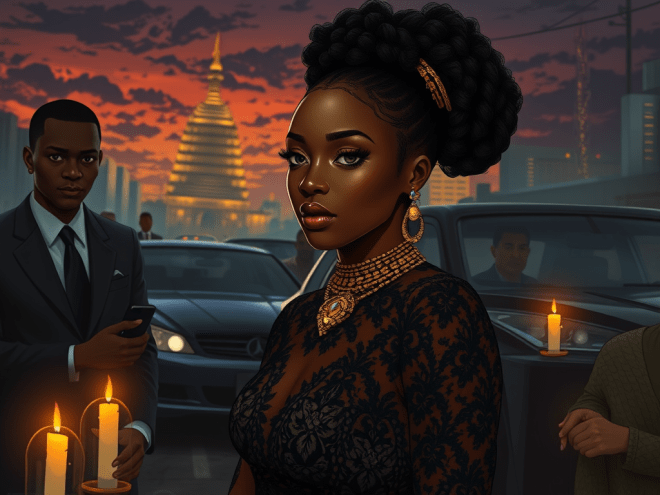
Noluntu walked through the streets as though wading through the residue of her own past. Each corner hummed with faint memory—the laughter of comrades, the sermons of street preachers, the soft murmur of her mother’s voice calling her Nkanyezi, my little star. But the name meant something different now. She could feel her light returning, though dim and uncertain.
Asher had vanished after the fire. No calls, no messages, only the faint smell of sandalwood that lingered in her apartment for days after. She wanted to dismiss him as fantasy, but the note he’d written still glowed faintly in the dark: You’re remembering.
In her sleep, fragments of her uncle’s funeral replayed in reverse—the men with gold rings, their eyes sharp as blades, chanting in a language older than isiZulu. One word echoed in her mind: Zedekiah. She found it the next morning in her book’s margins, written in ink that shimmered like oil.
Zedekiah—the priest-king, last of the holy line before captivity. Was it a name? A title? Or a warning?
That afternoon, she visited her parents’ old comrade, MaLebo, a retired revolutionary who lived in an RDP house on the outskirts of Soweto. The walls were lined with portraits of the struggle: fists raised, faces defiant. But the spirit had faded from them, like colour washed from old cloth.
“Your mother was a prophetess,” MaLebo told her between sips of rooibos. “She said your blood was older than the ANC, older than the Party, older than even the tribes. She said your line was the line of Levi—the priesthood of Israel. But we didn’t listen. We thought she was speaking in riddles.”
Noluntu frowned. “Levi? But how could that be—”
MaLebo raised a hand. “Child, there are stories buried under every revolution. Yours is not to explain. Yours is to remember.”
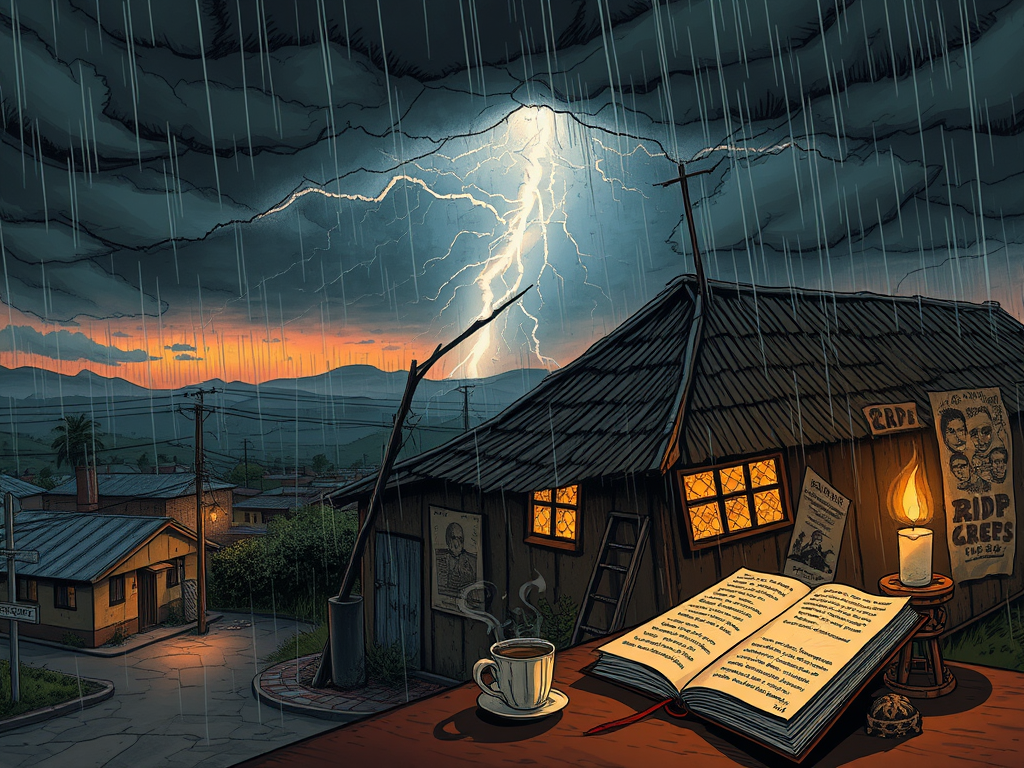
As Noluntu left, the sky split with thunder. A storm rolled over the city like a rebuke, washing the pavements clean of their false holiness.
Friendship is important. Individuality and independence is important too. Growing up, my church instilled values of aspiration to marriage. I have come to appreciate the idea of platonic soul mates.
What are your thoughts on ‘it will end in tears’?
‘So what if it ends?‘
And your thoughts on closure?
‘In my experience the idea of closure has not been useful. You cannot force the other person to care.‘
The newspapers called it another electrical fault. But Noluntu knew better. She recognized the scent in the ashes—the same blend of frankincense and cedar that had marked the first fire. The book had survived again. Only this time, it opened to a page she had never seen before. The ink glowed faintly, as if wet:
“The witch and the warrior are one flesh. The priestess and the planner are one mind. When the daughters of Zion remember, the nations shall tremble.”
That night, she sat by her window, watching the city breathe. Helicopters blinked like angels trapped in their patrols. A group of teenagers filmed a ritual dance under the bridge, fusing old Xhosa chants with synthesized beats. Across the street, a billboard flickered with the words: “Africa Rising—Invest in the Future.”
She laughed bitterly. Rising? The continent had been rising for decades, yet its children were still crawling.
But something stirred in her. A knowing. Her parents had once said, “Revolution begins in remembering.” Perhaps this book was not madness, but a map.
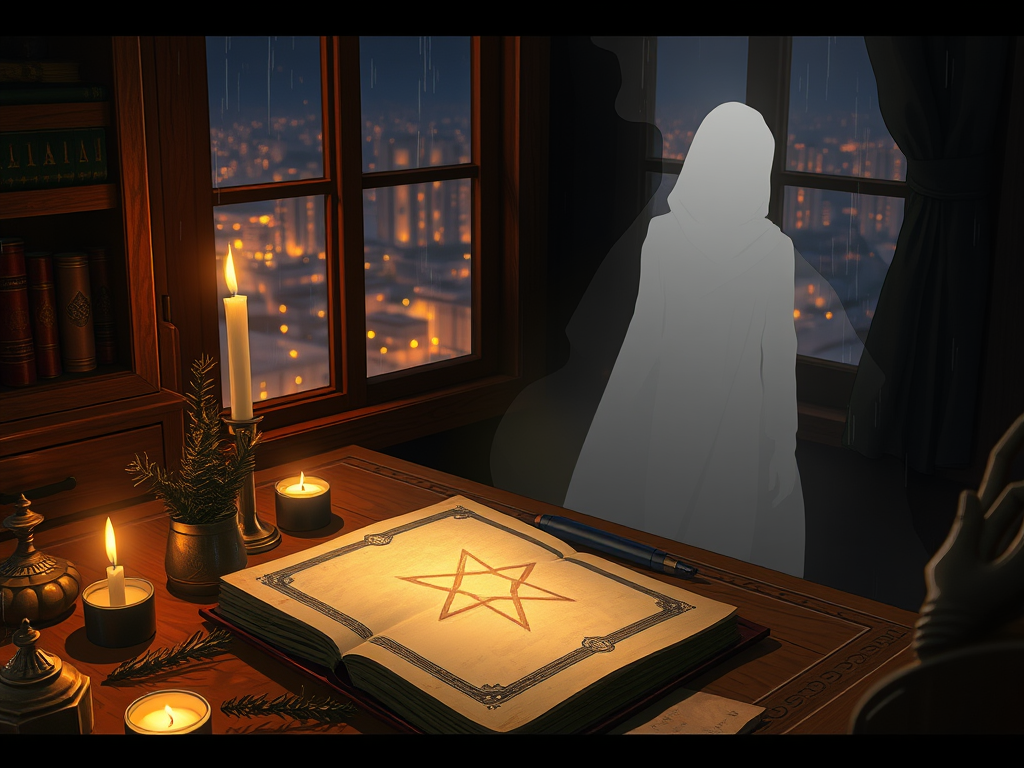
As she turned the pages, she found an unfamiliar symbol—a seven-pointed star woven with serpents. The symbol of The Ring. Beneath it, a line written in her own handwriting: “Blood remembers blood.”
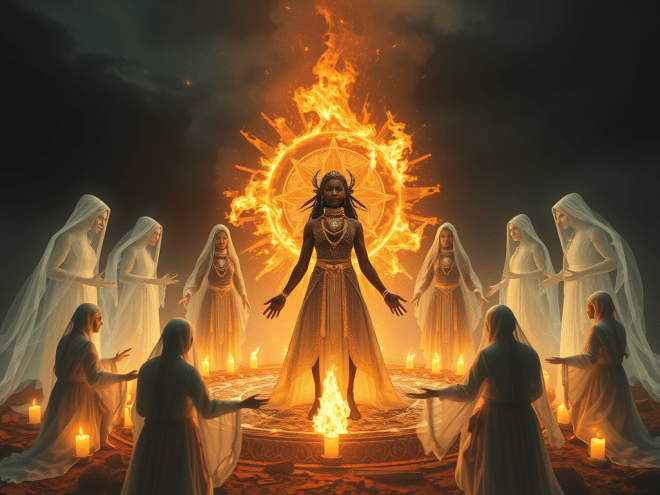
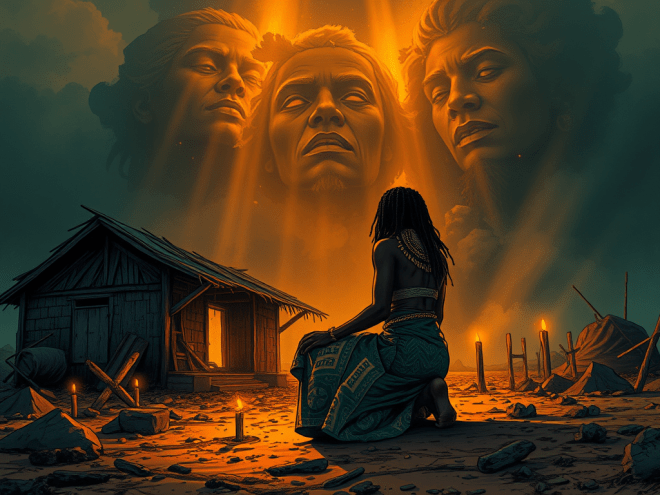
And in that moment, the city lights dimmed. The air thickened with the presence of unseen witnesses. Noluntu felt her pulse align with something older, something divine. The veil between worlds trembled.
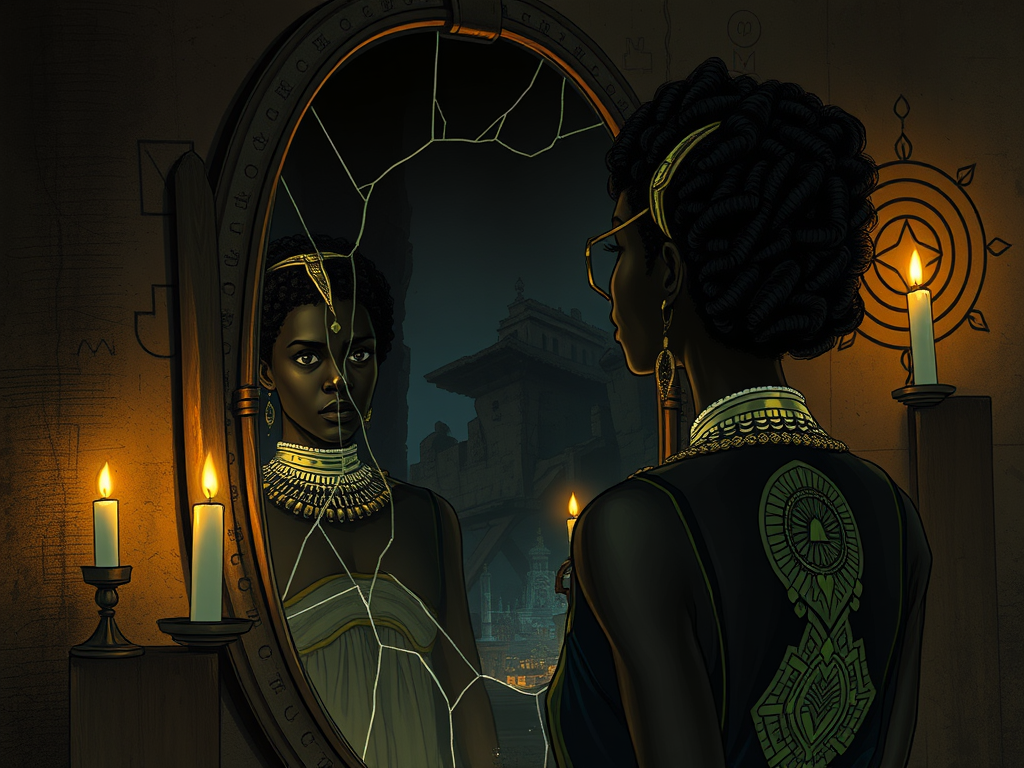
In the reflection of the window, she saw herself—but not herself. Another version, wearing white robes, her eyes alight with knowing. The other her spoke without moving her lips: “The time has come. Africa will not rise by economics or war, but by revelation.”
Then the reflection faded. And Noluntu, shaking, began to write.
A few weeks ago I had a conversation which has borne this piece. The part of that conversation which made an impression on me was a simple question. What reasons do I have to be in a relationship?
In the first instance, the question presumes the existence (and necessity) of ‘reasons’ to be in a relationship. As such, the question is loaded. Secondly, the word ‘reasons’ requires qualifying. A useful definition would be any causes or motivations. Put differently, what motivates my desire to be in a romantic relationship?
To answer this question, there is as much value in looking outward as there is in looking inward. I prefer to learn from the stories of the people around me. Thus, I contemplate this and other related questions with a dynamic sample of young people throughout the next few weeks.
He returned a week later, though she had replayed their first meeting in her mind every day since. His name, he said, was Asher.
He spoke like a man accustomed to holding secrets gently. His accent was unplaceable—somewhere between Cape Town and Cairo, with a hint of the desert in his vowels. He told her he worked in “strategic intelligence for development” —a phrase that meant nothing and everything.
Their conversations were elliptical. He asked about her book. She lied and said it was fiction. He smiled like he knew the truth.
“Stories are the only real history we have,” he said. “Everything else is propaganda.”
He listened more than he spoke, and when he did, his words felt like scripture smuggled through conversation. He asked about her dreams. She told him of the fire, of the symbols, of Judáh. He nodded gravely, as if recognising a prophecy he had long expected to meet.
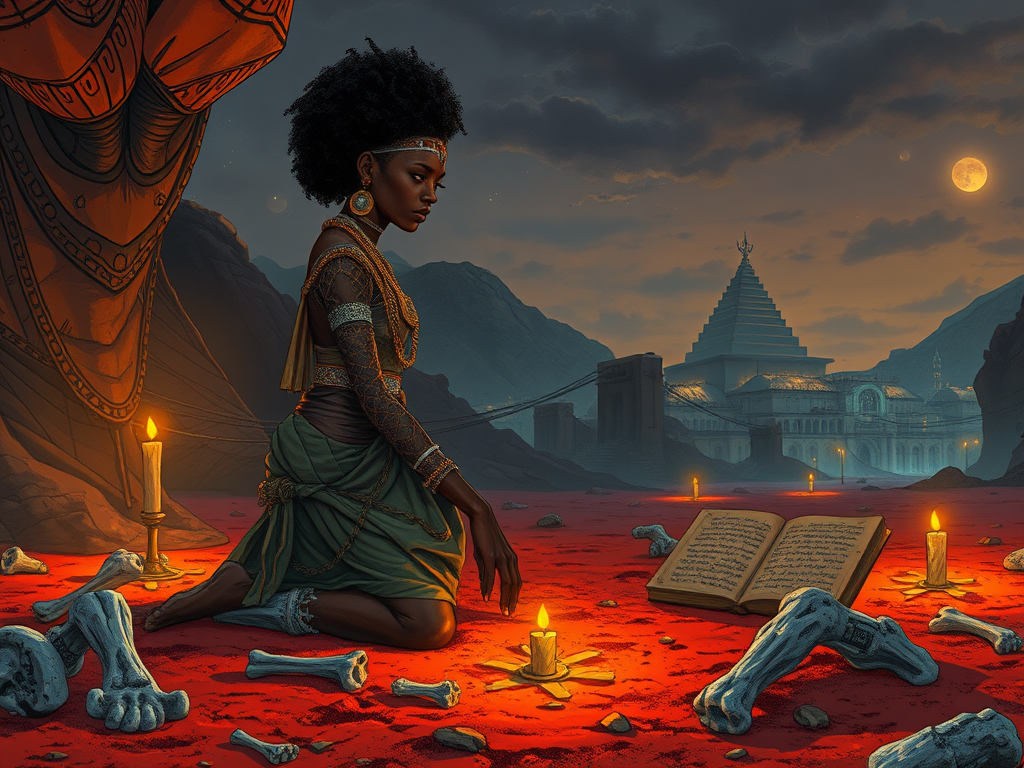
Later that week, she dreamed of him. In the dream, they stood in a vast desert where time had no direction.
He handed her a chalice carved from bone, filled with light. “Drink,” he said, “and remember who you are.” When she woke, her lips tasted of salt and honey.
The fire had begun three months before the story began—at least, that was what the police reports said. But Noluntu remembered no smoke, no screams, only light. Blinding light. When she woke, her hair smelled of frankincense and burnt cedar. Her hands bore no burns. She was told she was lucky. She didn’t feel lucky; she felt chosen.
Fragments of her past came back in flashes: her mother’s laughter during marches; the red berets of the Azanian Socialist People’s Movement; the chants of “Amandla!” echoing against government buildings. Her parents had been revolutionaries once—before the revolution was commodified, before slogans became hashtags. Her father had written pamphlets; her mother had written prayers. Together, they had believed in a South Africa that could be holy again.
And yet, their movement had disappeared like smoke after the flame. Corruption swallowed it whole. Some comrades became ministers, others moguls. Her uncle—beloved, feared, and enigmatic—had become a legend in exile. When he died, men in black coats and gold rings carried his coffin through the township, their tattoos glowing faintly in the sun. It was only then she learned he had been part of The Ring, one of the continent’s most notorious underworld networks.
It was said The Ring had financed revolutions and bought politicians. It was said they trafficked both weapons and dreams. It was said they’d been blessed by witches of the old lineages—those who walked the thin veil between matter and spirit. And Noluntu, with her amnesia and strange visions, began to wonder if the blood of that covenant ran through her veins.
By day, she worked in a café on Commissioner Street, serving imported lattes to disillusioned poets. By night, she wrote. Or perhaps was written. Her journal filled with strange diagrams: interlocking circles that resembled constellations, symbols of ancient priesthoods she did not recall studying. And always, in the margins, one word repeated in another hand: Judáh.
One evening, as rain bruised the horizon, a man entered the café. He carried the kind of stillness that made the air hold its breath. His eyes—grey, but warm—met hers briefly, and the world rearranged itself. There was something unbearably familiar in him, something from before the fire.
He ordered tea, left a generous tip, and a note on the saucer: “You’re not losing your mind. You’re remembering.”
The city stretched like a wound under the morning haze—its skyline a crown of smoke and glass, its arteries clogged with restless metal. The air was thick with the perfume of grease, exhaust, and despair.
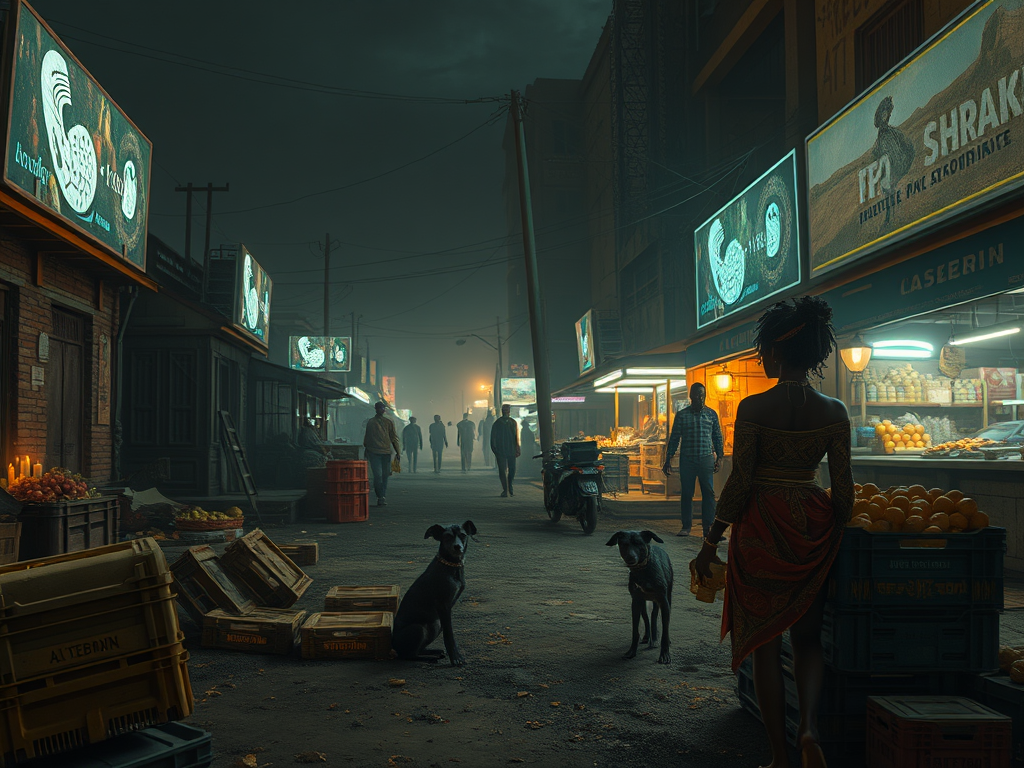
Billboards blinked the faces of false prophets and fast food messiahs, while children in tattered uniforms waited for taxis that never came. It was a city that had once promised liberation and rebirth, but now, its promise had fossilised into slogans. Johannesburg was no longer gold—it was rust.
At the heart of it, Noluntu moved through the crowds like a ghost unsure of its own existence. Her steps were steady, though her mind was fogged with fragments of another life—dreams, half-memories, visions she could not name. The book was the only thing she trusted. She had found it one morning beside the ruins of her apartment block after the fire. Everything else—furniture, clothes, photographs—had been consumed. Only the book remained, its leather cover unscathed, its pages faintly perfumed with myrrh.
The first line she read was not written in ink, but etched like a whisper in her mind: “Remember, child of the Covenant, for forgetting is the first death.”
Since then, the city had changed shape around her. She saw symbols where others saw smog: the flicker of a neon sign became a shofar’s call; the drones above her resembled locusts. She thought she might be going mad. But madness had its rhythm, and hers danced to the pulse of prophecy.
The book spoke of Africa as a sleeping lion—its mane matted with the sins of its children, its roar silenced by foreign tongues. It spoke of kingdoms buried under bureaucracies, of altars desecrated by ambition. It spoke of her—though she did not yet understand how. Each night, she wrote in the margins as if in conversation with the unknown author. Each morning, new words appeared that she did not remember writing.
Outside her window, the people of the city hurried to survive. Fast food stalls glowed under the weight of neon scripture: “Taste & See: 99c Miracles!” Dating apps glimmered with filtered faces, avatars that blinked prayers for validation. Children filmed their poverty for views. Pastors advertised deliverance by subscription. It was Revelation rewritten as reality TV.
And yet, somewhere between the advertisements and the hunger, she sensed holiness. Not in the churches, but in the quiet defiance of mothers braiding their daughters’ hair before dawn. Not in the noise of politicians, but in the stillness of taxi drivers who hummed hymns at red lights.
Her world was fractured, but something ancient called to her from the fragments. The name Noluntu meant “of the people.” She had forgotten who those people were—but perhaps the book would remind her.







 Lele Muthali